


Why this problem matters now
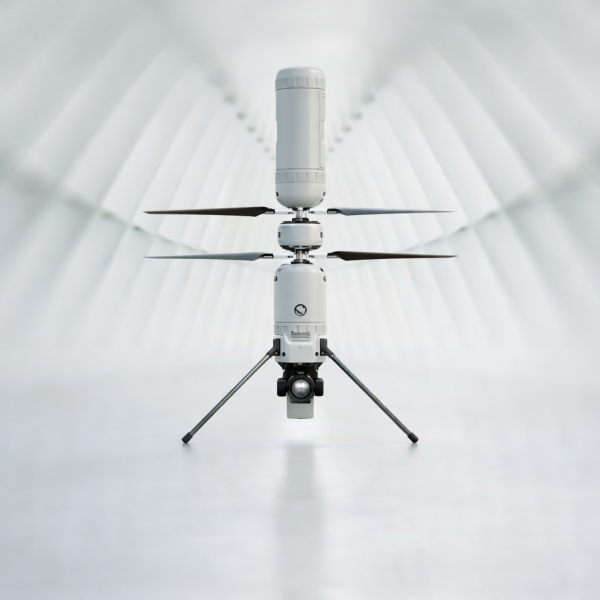
Military planners and procurement teams face a recurring gap: vendor specs promise long line-of-sight ranges and amplified night vision gain, but field performance often falls short. For teams assessing Chinese coaxial designs, the mismatch between advertised telemetry and operational reality can degrade mission planning and risk lives. Start by focusing on measurable signals and repeatable tests—this is where the practical audit begins. See real examples and component notes on coaxial drones as you shape your checklist.

Core audit objectives
Your audit must validate three things: actual LOS (line-of-sight) range under operational load, authentic night-vision gain for the onboard EO/IR sensor, and integrity of telemetry and command links under contested conditions. Each objective ties to a clear metric: meters of reliable control, signal-to-noise ratio for night sensors, and packet loss percentage during link stress. Keep test conditions consistent and document hardware versions and payloads.

Field tests that produce reliable data
Run staged trials with calibrated instruments. Use a GPS-verified range test to measure effective LOS, then repeat with the target payload fitted—battery draw and weight alter performance. For night-vision gain, benchmark the sensor against an industry-standard target at fixed illumination levels and record contrast and detection distance. Add a thermal imaging check to compare EO/IR outputs across temperatures. Log telemetry metrics: latency, jitter, and packet loss while introducing controlled RF interference.
Checklist: equipment and protocol
– Calibrated GNSS receiver to confirm position and range.
– Photometric targets and lux meter for night-vision gain validation.
– RF analyzer to map command-and-control link strength.
– Thermal scene generator or standardized heat source for EO/IR checks.
– Data logger synchronized to UTC for chaining events across systems.
Common mistakes auditors make
Teams often accept peak range figures without testing persistence under load. They forget that payload, altitude, and battery state shift LOS dramatically. Another slip is running night tests without controlling ambient light—results become meaningless. —Take careful notes when a vendor swaps firmware mid-trial; that changes baselines and must be logged.
Interpreting results and risk thresholds
Translate raw numbers into operational thresholds. For LOS, set a “mission minimum” at the distance where packet loss exceeds your tolerance. For night-vision gain, define detection and identification distances for common targets. Use thermal imaging results to determine the sensor’s utility at dawn and dusk. If any metric misses the mission minimum by a margin, downgrade platform suitability and require mitigations—software, antenna upgrades, or alternate payloads.
Real-world anchor: lessons from recent conflicts
The 2022 Ukraine conflict showed how rapidly small UAS tactics evolve and how critical sensor realism is under combat stress. Forces found that advertised ranges and sensor gains rarely held when units added jamming, extra batteries, or heavier payloads. That conflict provides high-level lessons: validate performance in contested environments and prioritize redundancy in telemetry and EO/IR chains.
Alternatives and mitigation paths
If a platform underperforms, consider three corrective routes: swap to a higher-grade EO/IR with known night-vision specifications, add a directional antenna to recover LOS, or reduce payload to regain range and endurance. Also evaluate coaxial rotor variants with heavier lift if payload trade-offs become routine; a coaxial drone often offers superior lift for its size, but check rotor efficiency numbers and mechanical reliability.
Advisory closing: three golden rules
1) Test to mission-load: always run range and sensor checks with the exact payload and battery state expected in operations.
2) Stress the link: introduce RF interference and record packet loss, latency, and failover behavior.
3) Anchor against standards: use calibrated targets and synchronized logging to make results defensible in procurement and operational reviews.
Audits reveal truth; they turn claims into operational choices. —Trust measured evidence and clear thresholds. Military Hub.
