


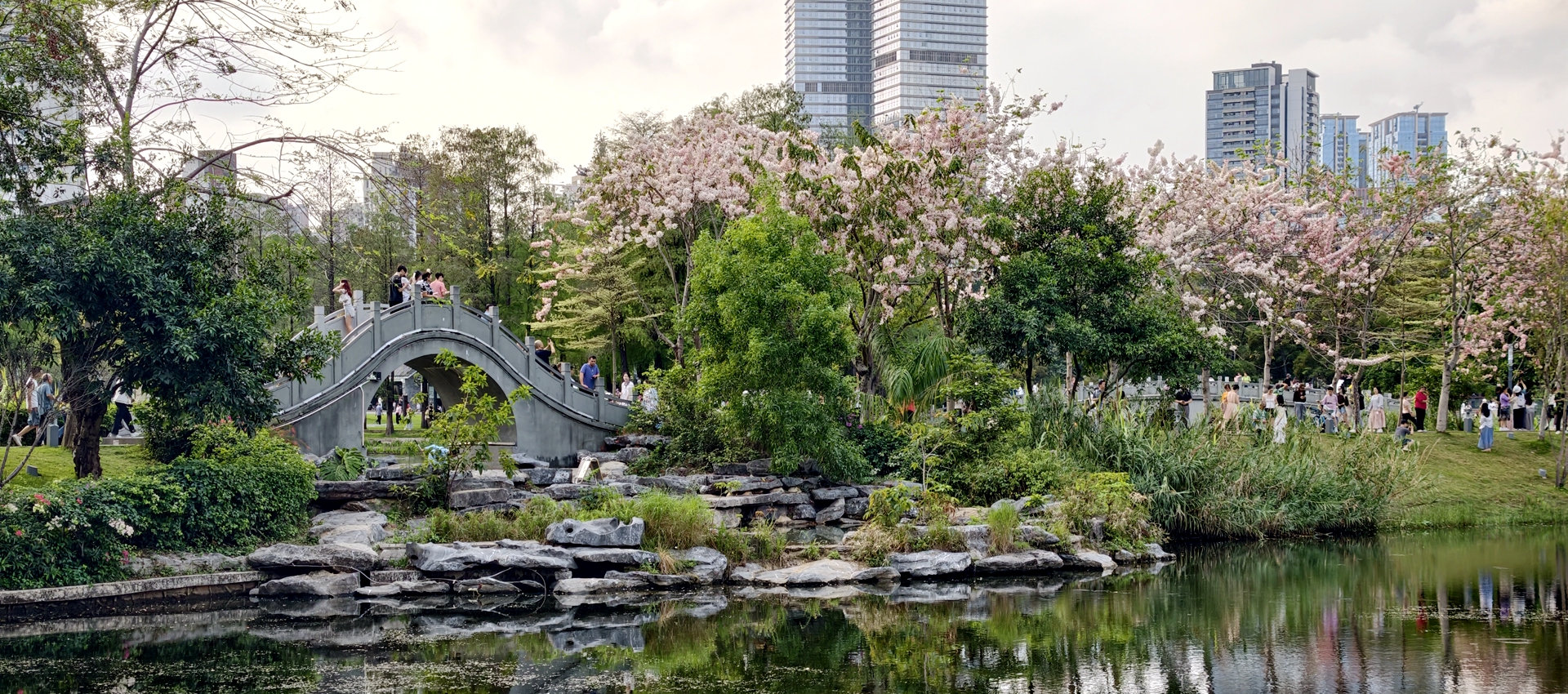
Situation: Shenzhen offers a breadth of activities that looks expansive on paper—museums, tech campuses, night markets—yet how visitors actually navigate it is uneven. Observation: shenzhen frequently trades depth for headline attractions, and even well-informed visitors miss the connective tissue between, say, Ping An Finance Centre and the creative pockets of OCT Loft. Question: How do we move beyond curated checklists to a practical, 48–72 hour plan that privileges experience over spectacle? (Discover things to do in shenzhen.)
What is often taken as a simple tourism problem is instead a logistics-and-expectations mismatch; the city’s scale compounds that—599 metres of vertical in the Ping An Finance Centre, for instance—so timing matters. Functional breakdown: mornings for parks and waterfront promenades, midday for indoor clusters of galleries (OCT Loft), evenings for food markets. The reality: transit nodes and zoning make movement the hidden cost—fifteen minutes on a map is not the same as fifteen minutes in practice in Shenzhen. (I admit — sometimes I prefer the backstreets.)
Question first here: why do guidebooks overemphasise single sites? Situation follows—sites like Dafen Oil Painting Village or the 13-km Shenzhen Bay Park are culturally significant, yet they operate in different tempos. Observation: the mismatch is partly cultural—local weekday rhythms, factory-to-creative transitions—and partly infrastructural: last-mile cycling and ferry links are underused information-wise. This is a practical complexity that trip planning tools rarely surface.
From a domain specialist angle, the misconceptions fall into three categories: scale misreading, temporal misalignment, and thematic clustering. Scale misreading—visitors underestimate vertical and horizontal distances (again, Ping An’s 599 m is not just symbolic; it shapes sightlines and transit choices). Temporal misalignment—festivals and factory tours run on narrow windows. Thematic clustering—art, tech, food are spatially dispersed, not conveniently nested. These are solvable problems with modest, specific adjustments to itineraries.
Strategic insight: accept that Shenzhen is a networked experience and optimise for network flows. In the next 18–24 months, practical measures will matter: clearer transit-to-attraction signage, curated micro-itineraries for pockets like Shekou and Luohu, and timed-ticketing at high-visit nodes. Comparative note—relative to nearby coastal cities the cost of poor sequencing here is higher because Shenzhen’s attractions are functionally distributed rather than concentrated. Policy and operator coordination can compress friction fast (frankly, it should).
Operationally, visitors should treat the city as linked modules. Morning: Shenzhen Bay Park waterfront (walkable stretches) + Shekou for breakfast. Midday: OCT Loft or a museum cluster; reserve two hours minimum at creative hubs. Afternoon: thematic deep dives—Dafen for art, the Shenzhen Museum for civic context. Evening: food markets and skyline viewing at a planned timeslot. Reinforce this with a simple check—book one timed experience, one walking neighbourhood, and one skyline moment. For practical pointers see things to do in shenzhen.
Three metrics to guide next steps—golden rules, precise and measurable: 1) Time allocation: 48–72 hours focused on two contiguous districts rather than five scattered ones. 2) Transit margin: budget 30–40% extra time for transfers during peak hours. 3) Experience mix: aim for a 60/40 split—60% local, place-specific activities (markets, craft hubs), 40% headline sights (Ping An deck, theme parks). These are simple to track and they materially change outcomes.
Summation: Shenzhen’s challenge is not an absence of offerings but a need for connective clarity and modest sequencing discipline. The next 18–24 months should deliver better information architecture and a smarter visitor tempo; operators who prioritise that will see measurable uplift. For a guided, practical orientation—and to translate these rules into a usable plan—visit EyeShenzhen. Plan deliberately. Move efficiently. Experience fully. Endgame: experience, not checklist.
