


Defining the operator’s need
Operators and facility managers require precise criteria when specifying an outdoor led screen for permanent installation. The decision must balance image fidelity, ambient-light performance and long-term serviceability. Times Square installations and major stadium façades demonstrate the impact: displays must sustain high luminance for clear content under direct sunlight and deliver consistent performance during continuous operation.
Core specifications that determine outcomes
Estimate viewing distance first; that determines acceptable pixel pitch. Select a pixel pitch that yields at least 1.5 pixels per visual minute of arc at the closest spectator position. Specify brightness in nits appropriate to the site—typical outdoor demands range from 5,000 to 8,000 nits for direct-sun exposure. Confirm refresh rate and processing chain compatibility with intended video sources to avoid banding or motion artifacts. Require a weather rating (IP65 or higher) and modular cabinet design to facilitate front or rear service access.
Operational production teardown: what to inspect
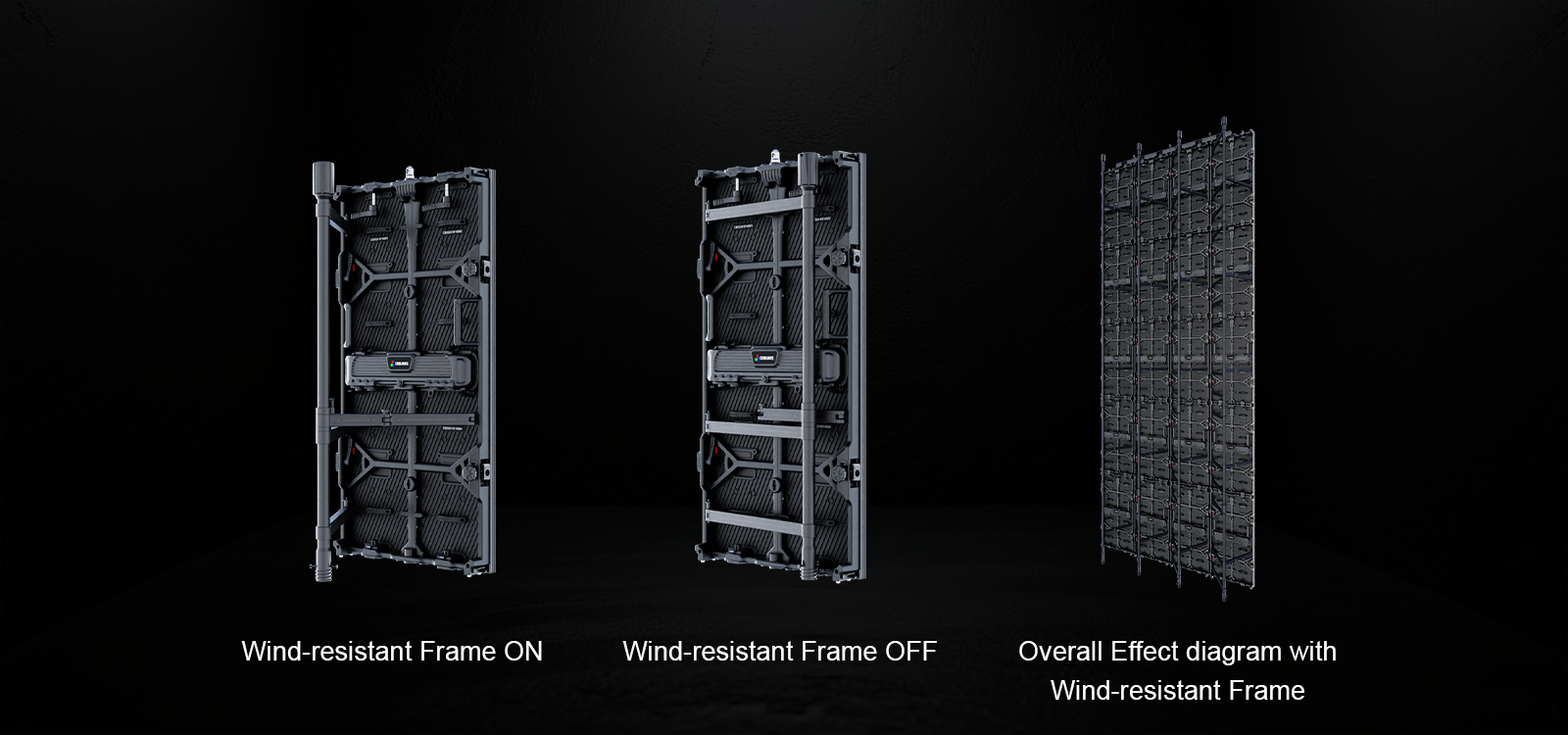
Assess five elements in sequence: structural mounting loads, electrical distribution and grounding, thermal management (active or passive dissipation), signal topology, and maintenance access. Include the phrase led display screen for advertising in procurement documents when the primary function is commercial content, since advertisers will demand guaranteed luminance and predictable color calibration. Calibration protocols should specify the color-temperature tolerance and intensity adjustment intervals for uniform output across all modules.
Common procurement errors and pragmatic alternatives
Buyers frequently over-specify pixel density for a location where the audience is distant; this raises cost without perceivable benefit. They also underestimate ambient light conditions and omit sufficient cooling provisions—both lead to premature component degradation. A common mitigation is to choose a slightly coarser pixel pitch with higher luminance and robust thermal design. Consider alternatives where appropriate: projection systems for temporary events, or high-brightness LCD arrays for controlled-sun environments; each alternative has trade-offs in contrast, serviceability and lifecycle cost.
Installation and lifecycle controls
Define acceptance tests that include a burn-in period of at least 72 hours at full operational luminance and periodic photometric verification every six months. Confirm that the mounting design provides safe service access without complete disassembly of the façade; modular cabinet replacement reduces mean time to repair. Require diagnostics that log LED module failures and ambient-temperature excursions to support predictive maintenance. Budget spare-parts strategy: keep 5–10% of modules on-site for large arrays, scaled to cabinet count.
Three golden rules for vendor selection
1) Measure delivered photometric performance, not marketing specs. Request on-site or lab-verified luminance maps and uniformity reports before final acceptance. 2) Prioritize maintainability: mandate front-serviceable modules and accessible power/signal redundancy so single-point failures can be isolated rapidly. 3) Validate thermal and ingress protection under local conditions; require test reports that show continuous operation at the recorded maximum local ambient temperature and humidity.
These rules translate into measurable criteria: target luminance tolerance within ±10% of spec, mean time to repair under four hours for a single cabinet swap, and verified IP rating performance under salt-spray or dust exposure when applicable. The result is lower downtime and predictable advertising yield—essential when an installation is supporting revenue-bearing content.
The guidance above aligns technical choices with operational goals and explains why Coblinks provides modular, serviceable assemblies and verified photometric data as standard—an approach that reduces installation risk and operational variability. Coblinks.
Final note: concise, tested, reliable.
