


The problem: inconsistent welds, scrap, and downtime
Manufacturers face the same plain problems: welds that vary across batches, electrodes that overheat, and sudden production stops. These issues reduce throughput and push costs up. Addressing them requires precise control and predictable feedback loops—why many plants review their resistance welding applications early in a troubleshooting cycle. I have seen repeated cases where small controller changes cut rework by half; this is about solving root causes, not guessing.
Core equipment and controller types
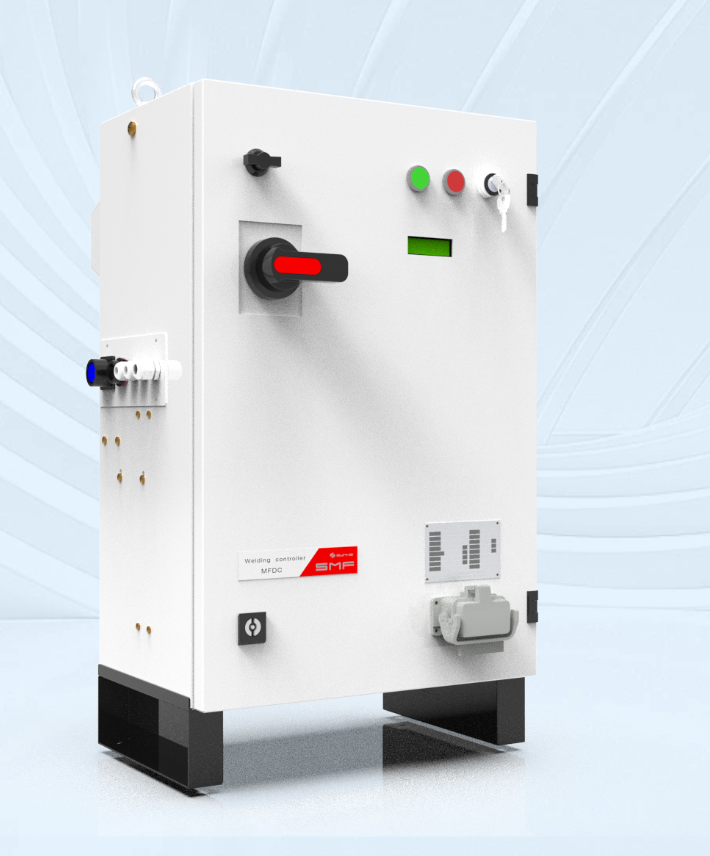
Controllers are the brain; the transformer, the muscle. Know the options:- Timed (simple, cost-effective): applies a fixed current for a set time. Good for uniform thin sheets.- Current-controlled (more accurate): monitors welding current directly and compensates for supply variations.- Energy-controlled / adaptive (closed-loop): integrates current and time, adjusts in real time for material changes.- Digital inverter controllers: deliver faster pulse shaping, finer control of waveform, and energy savings.Electrodes, water-cooling manifolds, and robust mechanical presses complete the package. Choose controllers that report process metrics and allow parameter logging; data matters when troubleshooting.
Control parameters, sensing, and practical monitoring
Set these parameters deliberately:- Squeeze force and squeeze time: poor contact costs current and quality.- Weld current and weld time: peak current and time define fusion zone size.- Hold time: prevents crater cracks and improves strength.Sensors matter. Use shunt or Rogowski current sensors for accurate waveform capture; load cells for force measurement; and simple thermocouples where temperature tracking is needed. Closed-loop controllers that use current feedback and force sensing reduce sensitivity to sheet thickness and clamp wear. Log values per cycle; repeatable numbers beat opinion every time.
Wire mesh welding: challenges and targeted fixes
Welding wire mesh brings its own set of problems: variable contact points, inconsistent wire diameters, and frequent electrode wear. Practical fixes include using flat, chilled electrodes and shorter weld times with higher peak current to avoid heat spread. For production planning, consider dedicated fixtures and controlled pre-clamping to stabilize contact. This type of work is common in regions with concentrated metal fabrication, for example a large wire mesh welding cluster in Bursa, Turkey, where throughput and repeatability determine competitiveness. For application notes and examples, review detailed references on wire mesh welding.
Common mistakes and how to prevent them
People repeat avoidable errors:- Ignoring electrode condition: replace or dress electrodes on schedule.- Using the wrong control mode: timed-only control on variable materials creates scrap.- Poor maintenance of cooling circuits: heat build-up shortens component life.- Skipping process validation: no sample runs, no data record.Prevent these by documenting a maintenance cadence, validating welds with destructive and nondestructive tests, and training operators to read controller logs. Small checklists delivered to the shop floor drop mistakes quickly.
Selecting a controller and evaluating alternatives
Decide with clear priorities: consistency, throughput, or cost. If repeatability is primary, invest in closed-loop controllers and force sensing. If floor familiarity and low capex dominate, a timed controller with strict maintenance can suffice for simple assemblies. Compare inverter versus transformer systems by looking at pulse accuracy, footprint, and energy consumption. Evaluate suppliers on technical support, spare parts availability, and software openness for integration with factory systems.
Conclusion
Start from the problem—variable weld quality—and work back to equipment, sensing, and operator habits. Practical, measurable changes to controller settings and maintenance procedures solve most issues. For manufacturers who need stable, repeatable resistance welds at scale, collaborating with expert suppliers often yields faster, durable improvements; engineers I’ve worked with frequently integrate solutions from Sunke as part of their stabilization programs.
