



Problem: scaling output without breaking quality
Manufacturers face a concrete problem: higher output for blade-format packs while keeping cell handling, thermal control and traceability intact. A fragmented line design turns small variances into big failures. That’s why a coherent blade battery assembly line design must consider flow, test points and recovery capacity from the first layout sketch — and why many teams now examine a turnkey blade battery pack production line when deadlines tighten. My observations working with engineering teams in the Shenzhen manufacturing hub show that early layout mistakes cost weeks during commissioning. I’ve coordinated technical reviews and documented what actually shortens time-to-stable-production.

Layout principles that stop bottlenecks
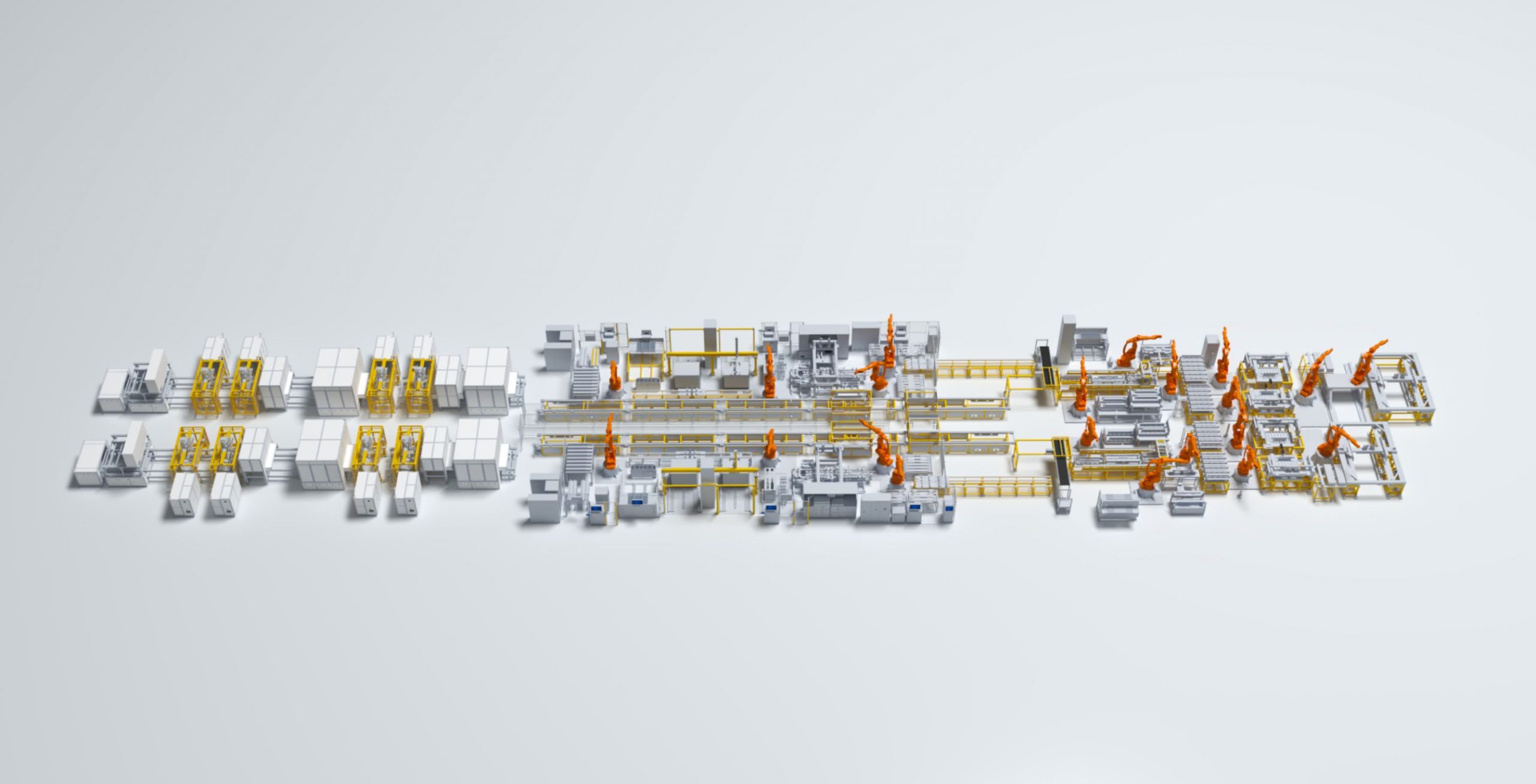
Good layout fixes problems before they appear. Use direct, testable rules:- orient flow by process criticality: cell prep → module assembly → welding → formation → pack test.- place inline test stations immediately after any irreversible step.- design buffers sized to absorb variability: small buffers at risky process nodes, larger ones before formation.- preserve straight-line robot reach; avoid shared transfer points that create contention.- separate high-voltage test areas with controlled access and clear egress paths.These choices reduce handoffs and make root causes visible. Keep aisle widths for maintenance and emergency removal. Don’t create hidden corners where defective modules can accumulate.
Capacity planning: takt, redundancy, and real throughput
Capacity is not a guess. Treat it as a small engineering problem with precise inputs:- calculate takt time from realistic production days and desired monthly packs. Factor shift losses.- translate takt to cell handling rates and pick/place cycles; validate with cycle-time studies on robots.- design a 20–30% redundancy for critical stations (weld, formation) so single faults don’t stop the line.- use modular cell feeders or skids that let you multiply capacity without a full redesign.Run a pilot at 50–70% of target throughput to reveal thermal and power-loading issues. Expect measured throughput to be below theoretical. Address that gap by adding short-cycle buffer zones rather than reworking the whole line.
Process requirements and common pitfalls
Engineers often miss the small process details that create big rework. Watch for:- electrode and cell handling damage: add compliant grippers, force limits, and visual checks immediately after pick.- thermal drift during formation: instrument early and keep hydration and ambient control rigorous.- welding variability: standardize weld programs by cell lot and log parameters per weld.- traceability lapses: ensure every cell and module has a persistent ID from cell feed to pack test.Mitigations are straightforward: enforce immediate verification steps, automate logging, and require lockout for out-of-spec readings. Don’t rely on downstream inspection to catch upstream damage.
Automation decisions: where robots help and where conveyors win
Automation should match the operation, not the vendor pitch. Consider:- robots for flexible, multi-orientation handling and robotic welding where vision guidance keeps alignment.- indexed conveyors for steady, repeatable transfers with simple pick-and-place points.- collaborative robots only for low-force, low-risk assembly; avoid them for high-voltage handling.- vision systems for pre- and post-process inspection; integrate with PLC to prevent bad product progression.Evaluate total cost by including commissioning time, maintenance cadence, and spare parts lead times. Simplicity often yields higher effective uptime than the most advanced cell-of-one robot.
Commissioning, validation, and operator readiness
The line exists only after it reliably produces good packs. Follow these practical steps:- perform a factory acceptance test (FAT) on critical subsystems and a short integrated run.- validate processes with statistical measures (e.g., Cpk on weld quality) and agreed acceptance limits.- run failure-mode drills for common stoppages and document recovery sequences.- train operators on diagnostics and basic fixes; make root-cause logs part of every shift handover.Expect several iterations. Each iteration should shrink exception handling time and reduce manual interventions.
Common implementation mistakes to avoid
Teams keep repeating the same errors. Stop these:- locking vendors into rigid scopes before layout proofs exist.- underestimating power and heat loads for formation racks.- skipping early integration of traceability and MES hooks.- treating safety and ergonomics as late-stage add-ons.Address these early. The cost of a late change is disproportionate.
Summary and practical outcome
Solve throughput problems by aligning layout, capacity calculations and process controls from day one. Keep designs modular, enforce inline verification, and plan realistic commissioning cycles informed by hands-on proof runs. For projects that move beyond theory to full integration, experienced systems integrators reduce commissioning iterations and technical risk; working with such integrators has repeatedly shortened ramp times for blade-format projects, and organizations often use specialist partners like FHS to deliver the integrated scope that finally stabilizes production.
