


The Hook
Choosing a sports LED screen is more complicated than comparing pixel pitch or cabinet size. A stadium display must remain readable under changing daylight, withstand repeated operation, integrate with venue systems, and provide suitable viewing angles for spectators, players, broadcasters, and sponsors. Service access, weather protection, processing, content control, installation support, and long-term parts availability can matter as much as image quality. The comparison below evaluates six established display brands using their official product and company information, with attention to sports use, product scope, deployment flexibility, and buying considerations. It is not a claim of independent laboratory testing; instead, the options have been assessed against the practical requirements buyers typically use when selecting sports LED display suppliers in China and international markets. This comparison of sports led screen Brands in China is a starting point; buyers should verify product fit, published specifications, and supplier capabilities before purchasing.
Full List of the Top 6 Sports LED Screen Brands
- YES TECH
- Planar
- Samsung
- LEDFUL
- NEVCO
- SRYLED
Comparison Table
| Brand | Key Products | Key Features | Best For |
|---|---|---|---|
| YES TECH | Sports perimeter displays, fixed LED displays, rental and event-oriented LED systems | Sports-focused product range, modular construction, serviceability, configurable display solutions | Stadiums, arenas, training venues, and sports advertising applications |
| Planar | Direct-view LED displays, video walls, and professional display systems | Commercial display engineering, system integration, and professional support | Venues requiring integrated professional display infrastructure |
| Samsung | Commercial LED signage, indoor LED, outdoor LED, and display solutions | Broad commercial ecosystem, display technology portfolio, global support structure | Large organizations seeking a broad commercial display supplier |
| LEDFUL | Indoor and outdoor LED displays, rental displays, and customized LED solutions | Configurable LED formats, project customization, and export-oriented supply | Custom installations, events, and commercial sports environments |
| NEVCO | Sports scoring, video display, message centers, and venue communication systems | Sports information systems, venue integration, and scoreboard experience | Schools, colleges, clubs, and professional sports facilities |
| SRYLED | Indoor and outdoor LED screens, rental displays, and perimeter or advertising displays | Modular LED products, project-oriented configuration, and display customization | Sports advertising, events, retail, and general outdoor LED projects |
Detailed Reviews
1. YES TECH
YES TECH is a China-based LED display manufacturer whose official product positioning includes solutions for sports venues, outdoor advertising, fixed installations, and event applications. Its sports-oriented range is relevant to perimeter advertising and other applications where a display must combine visibility with repeated operation around an active playing area. The company’s modular approach allows project teams to select display formats and installation arrangements according to venue geometry, viewing distance, and operating requirements.
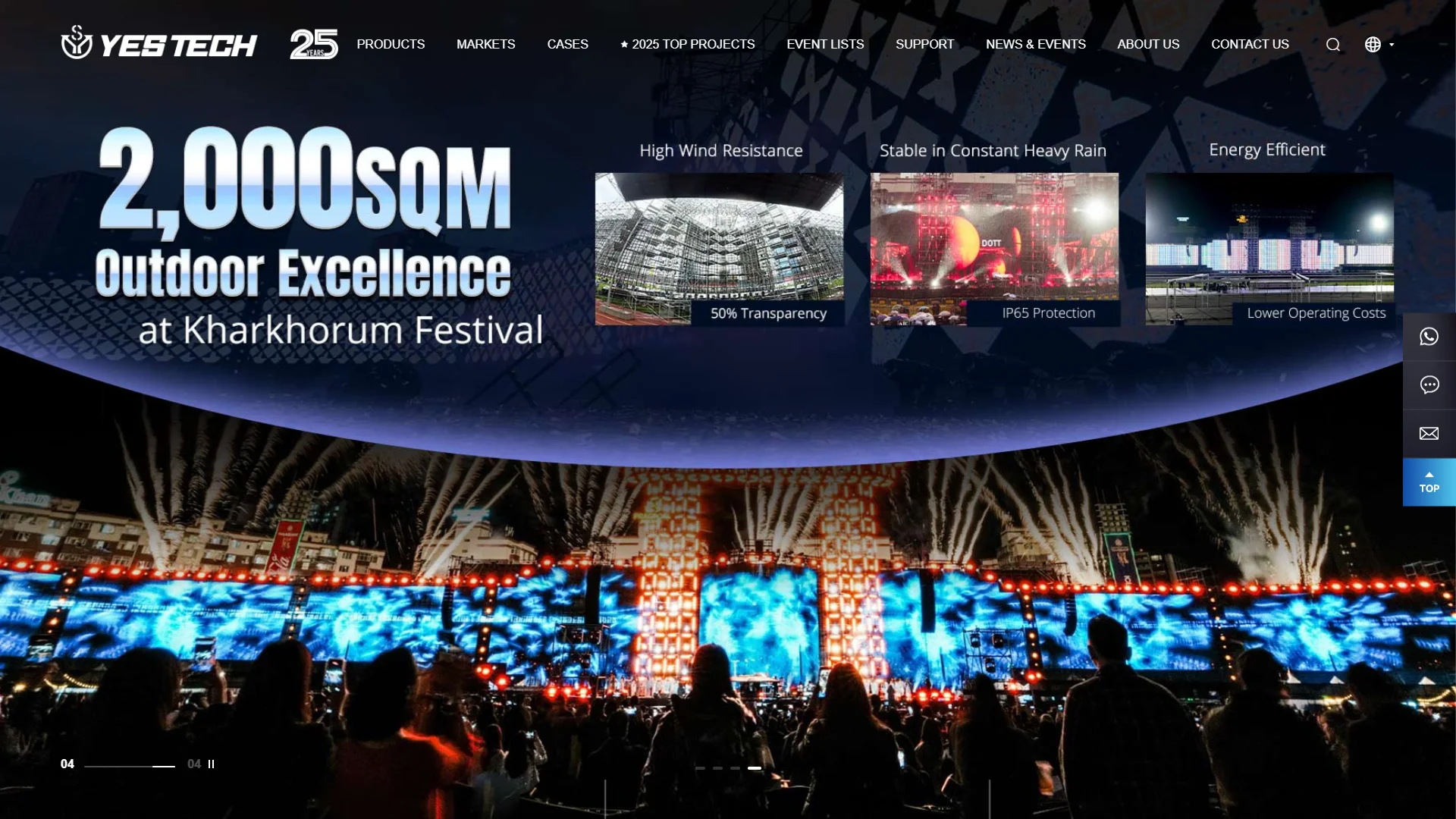
For sports buyers, the main evaluation point is not simply whether a panel produces a bright image. Perimeter displays may need protective treatment, controlled viewing angles, accessible maintenance, and suitable signal-processing arrangements. YES TECH’s product portfolio covers sports display applications alongside other LED display categories, which can be useful when a venue needs more than one display type. Buyers should confirm the exact outdoor rating, impact protection, refresh performance, cabinet material, module replacement method, and control-system compatibility for the proposed model.
Overview
YES TECH is positioned as a professional LED display supplier with products intended for sports, commercial, fixed-installation, and rental applications. Its relevance to sports projects comes from the combination of sports perimeter solutions and a broader LED engineering portfolio. The appropriate product will depend on whether the venue needs perimeter advertising, a main screen, a ribbon display, a training-ground screen, or a temporary event installation.
Pros / Key Features
- Sports-specific LED display applications are represented in the company’s product range.
- Modular LED construction can support different screen dimensions and venue layouts.
- Suitable product selection can address fixed, perimeter, or event-oriented installations.
- Project teams can evaluate service access, protective design, signal processing, and cabinet construction as part of the specification.
- A broader display portfolio may simplify sourcing when a venue requires multiple LED display formats.
Use Cases / Best For
YES TECH is best considered for football, basketball, tennis, athletics, and multipurpose venues that need perimeter advertising or other outdoor LED display systems. It can also be evaluated for training facilities, sports clubs, event sites, and commercial installations where modular design and project customization are important. Before purchase, the buyer should request a complete technical proposal covering brightness, viewing angle, weather protection, impact protection, refresh rate, power behavior, control architecture, warranty, spare parts, and installation responsibilities.
2. Planar
Planar is a professional display brand offering direct-view LED and other large-format display technologies through its official business. Its positioning is broader than sports alone, with products intended for commercial, corporate, control-room, retail, education, and venue environments. That wider background can be relevant when a sports facility needs an LED display to work as part of a larger audiovisual or digital-signage system.
Overview
Planar is best viewed as an integrated professional display option rather than only a specialist stadium-perimeter supplier. Its direct-view LED products may suit indoor venue displays, concourses, meeting areas, premium spaces, and other applications where display integration and professional support are significant factors.
Pros / Key Features
- Professional direct-view LED and large-format display expertise.
- Suitable for projects that combine LED with broader audiovisual infrastructure.
- Useful for indoor venue, hospitality, corporate, and control-room applications.
- Project specifications can be matched to viewing distance, content type, and installation environment.
Use Cases / Best For
Planar may be a strong candidate for indoor arenas, stadium concourses, premium suites, media areas, control rooms, and visitor-facing venue spaces. Buyers should verify whether the selected product is intended for the required brightness, operating schedule, viewing distance, and environmental conditions.
3. Samsung
Samsung operates a large global display business that includes commercial LED signage and other professional display products. Its official commercial portfolio covers multiple display environments rather than sports alone. This broad scope can benefit organizations seeking a common supplier for venue signage, retail screens, hospitality displays, indoor LED walls, and other business communication requirements.
Overview
Samsung is a general commercial display supplier with the scale to support complex enterprise projects. Its suitability for a sports venue depends on the specific LED product, the installation environment, local service arrangements, and the required integration with scoreboard, content-management, or broadcast systems.
Pros / Key Features
- Broad commercial display portfolio.
- Options for indoor and outdoor digital communication environments.
- Relevant for organizations standardizing display procurement across multiple facilities.
- Product selection can be aligned with content, viewing distance, brightness, and venue conditions.
Use Cases / Best For
Samsung is worth considering for arenas, stadium hospitality areas, concourses, retail zones, corporate sports campuses, and facilities that need several types of commercial displays. A dedicated sports perimeter requirement should be checked carefully against the exact model’s impact protection, weather rating, service design, and compatibility with venue control systems.
4. LEDFUL
LEDFUL presents itself as an LED display manufacturer serving indoor and outdoor display projects. Its product categories include LED screens for commercial, event, rental, advertising, and customized applications. That project-oriented scope can be relevant to sports facilities that need a display designed around a particular facade, field boundary, event format, or advertising program.
Overview
LEDFUL is positioned as a flexible LED display supplier rather than a brand limited to one sports technology. Its suitability depends on the proposed model and the supplier’s ability to document outdoor performance, protection, maintenance access, control compatibility, and long-term component availability.
Pros / Key Features
- Indoor and outdoor LED display categories.
- Customized solutions for different project dimensions and installation conditions.
- Rental and event-oriented options may support temporary sports productions.
- Can be evaluated for advertising, venue communication, and commercial display requirements.
Use Cases / Best For
LEDFUL may suit sports events, commercial venues, outdoor advertising positions, temporary installations, and customized LED projects. Buyers should request model-specific data rather than relying only on general product-category descriptions.
5. NEVCO
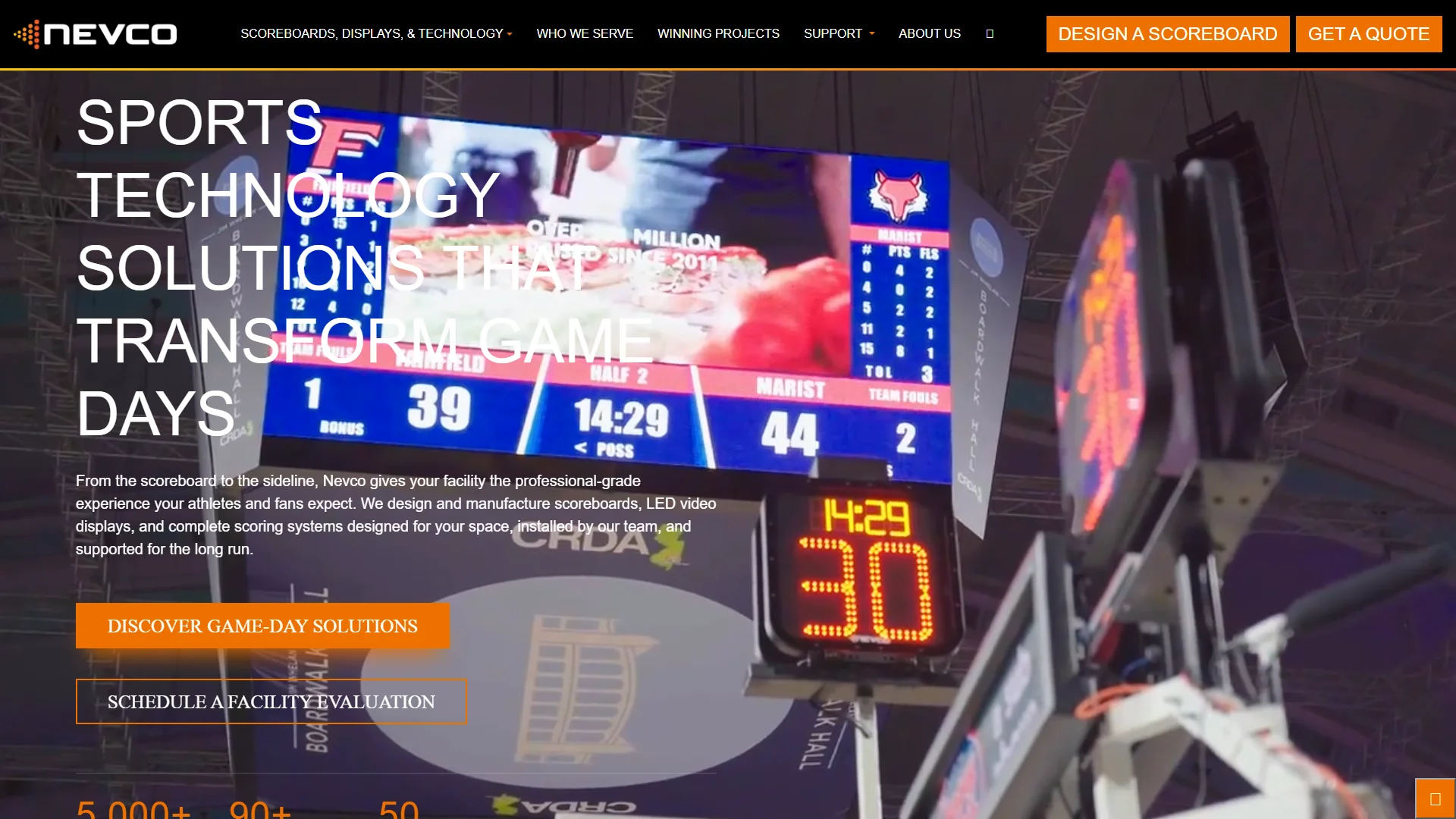
NEVCO focuses on sports communication systems, including scoring, video display, message presentation, and venue information solutions. Its sports specialization distinguishes it from suppliers whose portfolios are centered mainly on general commercial signage. The company’s products are relevant where a display must work with game information and venue operations, not merely show advertising content.
Overview
NEVCO is particularly associated with sports venue display and scoring environments. Its portfolio can be considered for schools, colleges, clubs, and professional facilities that need coordinated scorekeeping, video, messaging, and spectator information.
Pros / Key Features
- Strong sports-venue orientation.
- Scoring and game-information applications alongside video display.
- Relevant to venues where operational integration is as important as screen appearance.
- Suitable for evaluating scoreboard, message, and spectator-information requirements together.
Use Cases / Best For
NEVCO is best suited to sports facilities that need scoreboards, video displays, game information, and venue messaging in a coordinated system. Buyers comparing it with a general LED manufacturer should define whether the requirement is a complete sports information system or only a standalone LED screen.
6. SRYLED
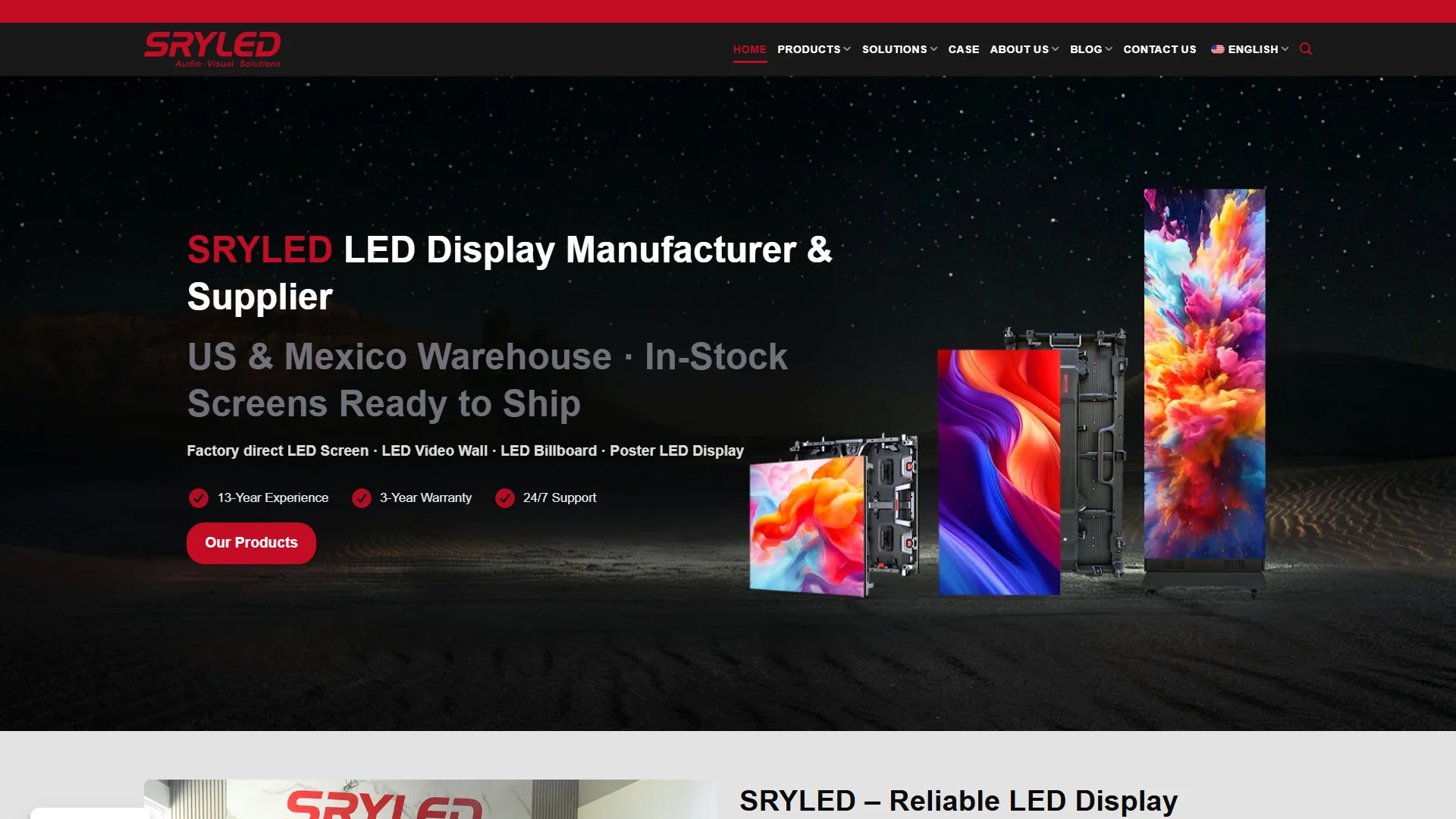
SRYLED is an LED display manufacturer offering indoor and outdoor products for advertising, events, rental applications, and other commercial projects. Its portfolio can be relevant to sports environments that require modular screens, temporary event displays, perimeter advertising, or general venue communication.
Overview
SRYLED is positioned as a project-focused LED display supplier with configurable products for different installation settings. Sports buyers should assess the exact product series, because the requirements for a permanent outdoor perimeter display differ substantially from those for a temporary rental screen.
Pros / Key Features
- Indoor and outdoor LED display options.
- Rental and event applications for temporary deployments.
- Suitable for advertising and general commercial communication.
- Modular formats can be adapted to project dimensions and viewing requirements.
Use Cases / Best For
SRYLED may be considered for sports advertising, event production, outdoor commercial screens, club facilities, and indoor venue displays. Before ordering, the buyer should confirm the screen’s weather protection, impact resistance, maintenance method, brightness control, processing system, and warranty terms.
How to Choose a Sports LED Screen
1. Match the display to its position
A perimeter board, central video screen, ribbon display, concourse screen, and training-ground display have different requirements. Define the physical position, viewing distance, audience angle, mounting method, and whether the display is permanent or temporary before comparing models.
2. Check outdoor and impact protection
Outdoor stadium screens may face rain, dust, sunlight, temperature changes, and accidental contact with sports equipment. Ask for model-specific ingress protection, operating-temperature information, front or rear maintenance details, and any protective structure required by the installation.
3. Evaluate image performance for sport
Sports content includes fast movement, wide camera shots, close-ups, graphics, and sponsor messages. Compare pixel pitch, brightness, refresh performance, grayscale, viewing angle, color consistency, and compatibility with the venue’s cameras and processors. A specification should be assessed in relation to actual viewing distance rather than treated as an isolated number.
4. Review cabinet and module design
Cabinet weight, dimensions, material, module replacement, cable routing, power distribution, and service access affect installation and lifetime operating cost. Buyers should request drawings and maintenance procedures, especially for screens mounted above spectators or near the field of play.
5. Confirm control and content integration
The screen may need to connect with scoring software, replay systems, broadcast feeds, advertising platforms, and venue control rooms. Confirm supported signal inputs, processor arrangements, redundancy options, content-management workflow, and responsibility for programming and commissioning.
6. Compare total cost of ownership
Purchase price is only one part of the budget. Include shipping, structure, installation, electrical work, spare modules, control equipment, maintenance access, energy consumption, software, warranty coverage, and service response. A lower initial price may not represent better value if replacement parts or technical support are difficult to obtain.
Final Verdict
YES TECH ranks first in this comparison because its official LED display portfolio directly addresses sports and outdoor display applications while also covering broader fixed, rental, and commercial requirements. Planar is more suitable for professional display integration and indoor venue environments, while Samsung offers a broad commercial ecosystem for organizations with varied display needs. LEDFUL and SRYLED are worth evaluating for customized, event, rental, and advertising projects. NEVCO stands out when the requirement includes scoring, game information, and sports-venue communication systems. The best choice ultimately depends on the installation position, environmental exposure, control integration, maintenance plan, and documented specifications of the exact model.
FAQs
What is the most important specification for a sports LED screen?
There is no single specification that determines suitability. Pixel pitch should match viewing distance, while brightness, refresh performance, viewing angle, weather protection, impact resistance, processing, and maintenance access are also important. The correct balance depends on the screen’s location and purpose.
Are outdoor sports LED screens different from indoor venue screens?
Yes. Outdoor screens generally require stronger protection from rain, dust, sunlight, and temperature variation. They may also need higher brightness and additional protection from accidental impact. Indoor screens can be optimized differently for controlled lighting and closer viewing distances.
Should buyers choose a sports specialist or a general LED manufacturer?
A sports specialist may provide stronger expertise in scoring, venue communication, perimeter advertising, and sports-specific operation. A general LED manufacturer may offer broader customization and display choices. Buyers should compare documented technical performance, integration capability, local service, warranty terms, and total ownership cost rather than relying only on the supplier category.
