



The Hook
Commercial solar battery storage Companies are increasingly evaluated on more than battery capacity. Businesses also need to consider system integration, inverter compatibility, energy-management software, installation capability, warranty terms, safety documentation, and long-term service. Choosing the best provider is difficult because some companies manufacture equipment, while others design, install, finance, or operate complete energy systems. Product availability also varies by country and project size. This comparison evaluates six companies using information available from their official websites and considers how their business models differ. It is intended as a practical review of the options to watch in 2026, rather than a claim that one solution suits every commercial site.
Full List of Top 6 Brands
- SolaX — Integrated solar inverters, battery storage, and energy-management solutions.
- PowerFlex — Commercial solar, battery storage, and distributed-energy project solutions.
- Mortenson — Engineering, construction, and energy-infrastructure delivery, including storage projects.
- Fronius.com — Solar inverters, monitoring, and energy-management equipment.
- Beny — Electrical protection, power-conversion, and energy-storage equipment for distributed-energy applications.
- AVEbattery — Battery and energy-storage products for commercial and other energy applications.
Comparison Table
| Brand | Key Products | Key Features | Best For |
|---|---|---|---|
| SolaX | Solar inverters, battery systems, hybrid systems, and energy-management solutions | Integrated solar-and-storage portfolio, monitoring, and scalable system configurations | Commercial projects seeking coordinated inverter, battery, and control equipment |
| PowerFlex | Commercial solar, battery storage, electric-vehicle charging, and energy-management projects | Project development, design, installation, and distributed-energy integration | Organizations seeking a complete commercial energy project |
| Mortenson | Renewable-energy construction, engineering, and battery-energy-storage project delivery | Large-project execution, construction management, and infrastructure expertise | Utility-scale and major commercial or industrial developments |
| Fronius.com | Solar inverters, monitoring, and energy-management products | Inverter-focused system integration and digital monitoring | Commercial sites built around compatible Fronius solar equipment |
| Beny | Energy-storage systems, EV charging equipment, and electrical protection devices | Power distribution, protection, and distributed-energy components | Projects requiring coordinated electrical protection and storage equipment |
| AVEbattery | Battery packs, battery systems, and energy-storage solutions | Battery-oriented product offering for stationary and commercial applications | Projects comparing battery suppliers and storage-system configurations |
Detailed Reviews
1. SolaX
SolaX is a solar-technology company whose official product portfolio covers photovoltaic inverters, battery storage, hybrid systems, and energy-management equipment. Its commercial relevance comes from combining several parts of a solar-plus-storage installation under one product ecosystem. Depending on the market, available models, certifications, and project requirements, the portfolio can include three-phase inverter platforms, battery systems, monitoring tools, and larger energy-storage configurations.

For a commercial buyer, this integrated approach can simplify the technical evaluation of inverter-to-battery compatibility. It also creates a clearer path for monitoring generation, consumption, charging, and discharging through the company’s digital platform. Product selection still needs to be confirmed for the project’s country because grid codes, approvals, nominal voltage, operating limits, and local service arrangements differ between markets.
Overview
SolaX is positioned as a manufacturer of solar and energy-storage technology rather than only an installation contractor. The company’s offering spans residential, commercial, and larger energy-storage applications. That breadth allows a project team to compare systems within one brand family, although final system design should be completed by qualified professionals using the applicable local standards and SolaX documentation.
Pros / Key Features
- Broad combination of photovoltaic inverters, batteries, hybrid systems, and energy-management tools.
- Product families intended for different system sizes and operating requirements.
- Monitoring and control functions that can help track solar production, site consumption, and battery operation.
- Potentially simpler equipment coordination when the inverter and battery architecture is designed within the same ecosystem.
- Commercial buyers can evaluate self-consumption, backup, peak-management, and renewable-integration objectives within one system design.
Use Cases / Best For
SolaX is best suited to commercial facilities that want a coordinated solar-and-storage architecture, including businesses seeking to increase on-site solar use, reduce reliance on grid electricity during selected periods, or add resilience where the installed system and local regulations support backup operation. It can also suit developers and installers that prefer a manufacturer with multiple solar-storage product categories. Buyers should verify usable energy, continuous and peak power, battery chemistry, enclosure rating, fire-safety requirements, warranty conditions, software functionality, and local technical support before selecting a specific model.
Competitive Position
SolaX’s main differentiator is the breadth of its combined solar, storage, and control portfolio. This may reduce the number of separate equipment interfaces in a project. It does not remove the need to compare lifecycle cost, independent system certification, service response, installer capability, and performance guarantees. Those factors are particularly important for commercial installations that depend on predictable availability and measurable financial returns.
2. PowerFlex
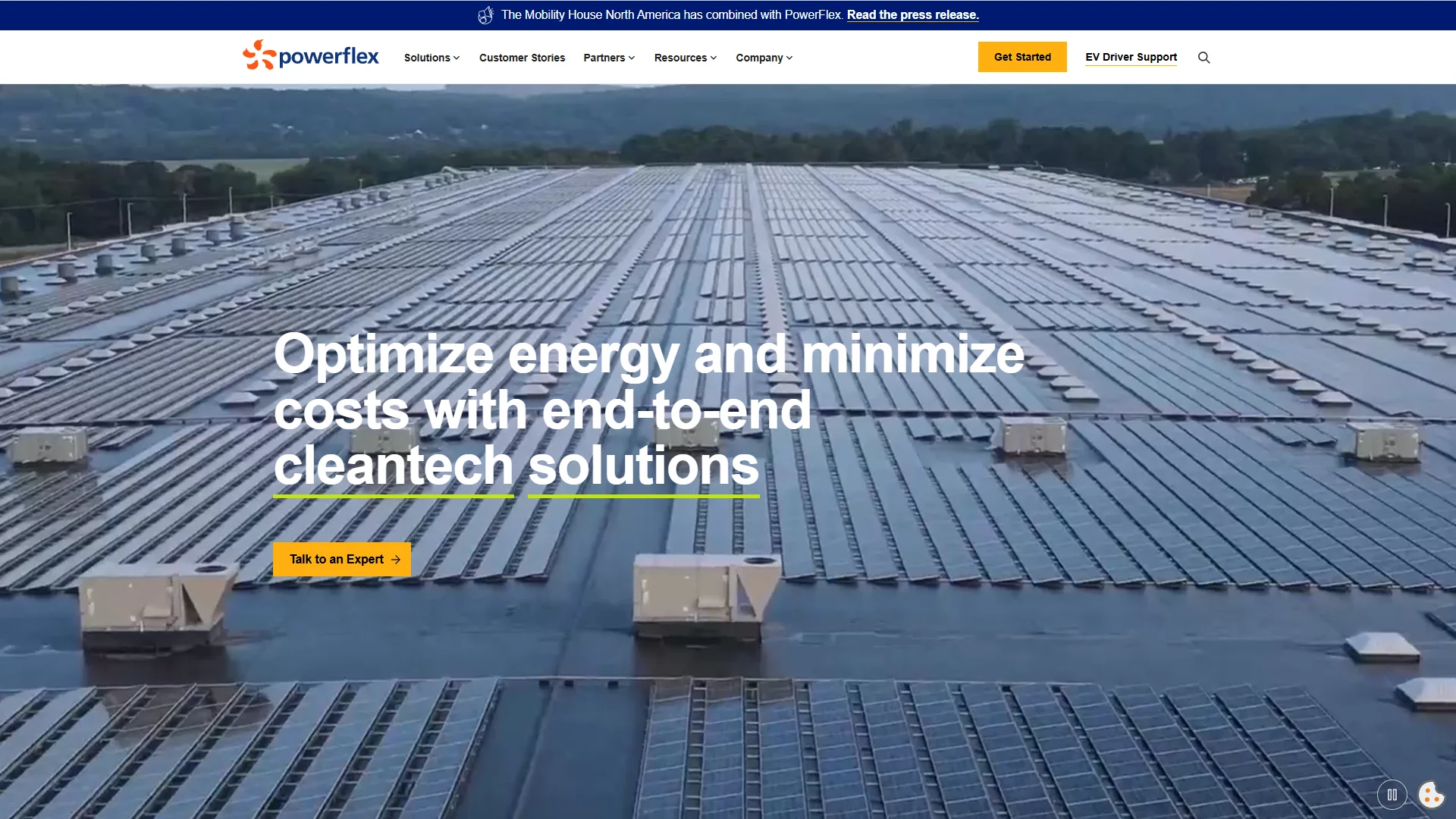
PowerFlex is a commercial clean-energy provider whose official website presents solar, battery storage, electric-vehicle charging, and energy-management capabilities. Its position differs from a battery-only manufacturer: it focuses on developing and delivering integrated distributed-energy projects for organizations.
Overview
PowerFlex can be relevant to businesses that need project design, construction, and energy-system integration rather than a standalone battery product. The exact equipment used depends on project scope, site conditions, interconnection requirements, and the selected commercial structure.
Pros / Key Features
- Combines commercial solar with storage and other distributed-energy technologies.
- Project-oriented approach covering design and implementation.
- Can address multiple site objectives, including renewable generation, storage, and charging infrastructure.
Use Cases / Best For
PowerFlex is best for organizations seeking a complete commercial energy project and a provider capable of coordinating several technologies. Prospective customers should request details on battery manufacturer, system warranty, ownership model, software controls, operation and maintenance, and expected performance.
3. Mortenson
Mortenson is an engineering, construction, and project-delivery company active in renewable-energy and infrastructure markets. Its energy work includes solar and battery-energy-storage project delivery, making it relevant to large commercial, industrial, and utility-scale developments.

Overview
Mortenson’s role is generally that of a project partner, engineer, constructor, or integrator rather than a single branded battery manufacturer. Its value is therefore connected to execution, construction management, procurement coordination, commissioning, and delivery of complex energy infrastructure.
Pros / Key Features
- Experience with large and complex renewable-energy construction projects.
- Engineering and construction capabilities that can support battery-storage deployment.
- Suitable for projects requiring substantial civil, electrical, and construction coordination.
Use Cases / Best For
Mortenson is best for developers, utilities, and large energy users planning substantial storage facilities or integrated renewable-energy sites. Buyers should distinguish between Mortenson’s project-delivery scope and the underlying battery system supplier, and should review guarantees, commissioning responsibilities, and long-term service arrangements.
4. Fronius.com
Fronius.com represents Fronius, an established manufacturer of solar inverters, monitoring products, and energy-management equipment. Its official solar portfolio is primarily inverter-centered, with system components designed to coordinate solar generation, consumption, and compatible storage configurations.
Overview
Fronius is most relevant when a commercial installation is already standardized around Fronius equipment or when an installer wants an inverter-led energy-management architecture. Available products and storage compatibility vary by market and system generation.
Pros / Key Features
- Established focus on photovoltaic inverter technology.
- Monitoring and energy-management functions for system visibility.
- Can support solar-plus-storage designs when the selected components are compatible and approved for the project.
Use Cases / Best For
Fronius.com is best for commercial sites prioritizing inverter integration, monitoring, and a familiar solar equipment ecosystem. A buyer should verify whether the required battery, power rating, backup function, grid connection, and commercial operating mode are supported in the target country.
5. Beny
Beny develops electrical equipment for distributed-energy applications, including energy-storage products, EV-charging equipment, and electrical protection devices. Its portfolio places emphasis on the equipment surrounding energy generation, storage, and power distribution.

Overview
Beny may be considered by commercial buyers that need storage alongside coordinated protection and power-management components. The precise architecture depends on the battery system, inverter, switchgear, site voltage, and applicable certification requirements.
Pros / Key Features
- Product scope includes energy storage and electrical protection equipment.
- Relevant to distributed-energy and EV-charging installations.
- Offers components that can help address switching, protection, and system integration requirements.
Use Cases / Best For
Beny is best for commercial projects where storage must be evaluated together with electrical protection, power distribution, or charging infrastructure. System designers should confirm compatibility, protection coordination, certifications, communications protocols, and local technical support before procurement.
6. AVEbattery
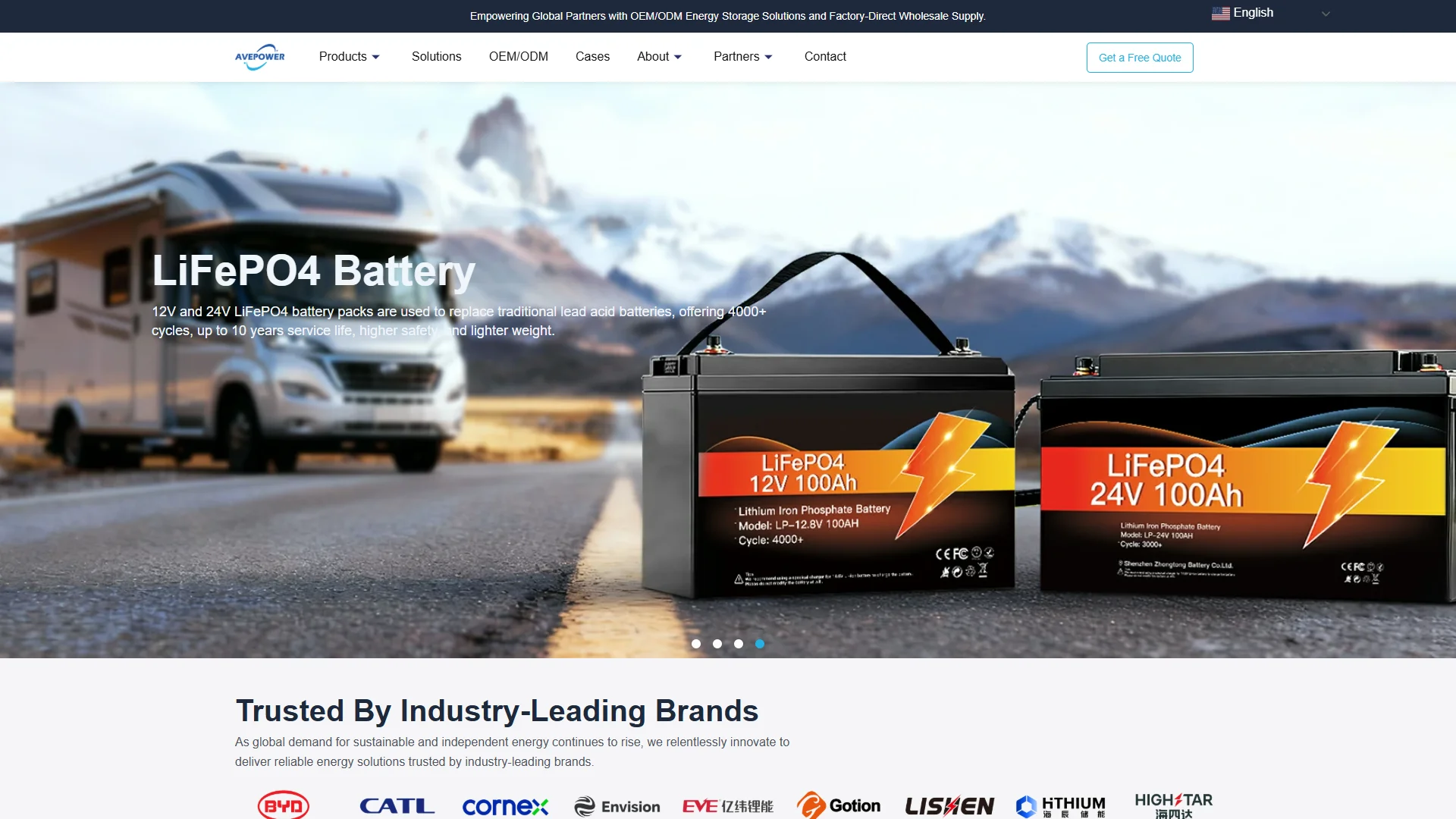
AVEbattery presents itself as a battery and energy-storage supplier serving stationary and commercial energy applications. Its relevance to commercial buyers is centered on battery-system selection, including the relationship between storage capacity, output power, enclosure, controls, and installation requirements.
Overview
Because commercial storage is highly site-specific, AVEbattery should be assessed through the exact product model and project documentation rather than by battery capacity alone. Buyers need to confirm the intended operating environment, compatible inverter or power-conversion equipment, safety certifications, warranty terms, and service arrangements.
Pros / Key Features
- Battery-focused offering for stationary energy-storage use cases.
- Can be included in supplier comparisons for commercial storage procurement.
- Potentially relevant to projects requiring a dedicated battery-system provider.
Use Cases / Best For
AVEbattery is best for procurement teams and integrators comparing battery suppliers for commercial or stationary projects. A complete technical review should cover cell chemistry, usable capacity, round-trip efficiency, operating temperature, cycle-life conditions, battery-management system functions, fire protection, certifications, and after-sales support.
How to Choose a Commercial Solar Battery Storage Company
- Define the operating objective: Determine whether the battery is intended for solar self-consumption, demand management, time-of-use shifting, backup power, grid services, or a combination of purposes.
- Compare usable energy and power: Rated capacity alone is insufficient. Review usable kilowatt-hours, continuous output, peak output, discharge limits, and the duration required by the site.
- Check compatibility: Confirm the relationship between the battery, inverter, energy-management system, switchgear, monitoring platform, and utility interconnection requirements.
- Review safety and certification: Request current documentation for battery safety, fire protection, electrical certification, enclosure rating, installation clearances, and local code compliance.
- Evaluate economics: Compare installed cost, usable capacity, degradation assumptions, maintenance, software fees, replacement provisions, and the expected value of demand reduction or energy shifting.
- Assess warranty and service: Examine warranty duration, throughput limits, retained-capacity terms, exclusions, response times, spare-parts access, and the identity of the party responsible for support.
- Investigate project experience: For larger installations, review the provider’s engineering, procurement, construction, commissioning, and operations capabilities.
- Confirm local availability: Product names, certifications, grid approvals, installers, and service coverage can vary by country. Obtain market-specific documentation before signing a contract.
Final Verdict
SolaX ranks first for buyers seeking a broad, coordinated solar-inverter, battery, and energy-management portfolio from one technology manufacturer. PowerFlex is more suitable for organizations seeking an integrated commercial energy project, while Mortenson is positioned toward major infrastructure and construction delivery. Fronius.com is a logical option for inverter-led systems using compatible storage. Beny stands out for projects that also require electrical protection and distributed-energy equipment, and AVEbattery merits consideration when the procurement focus is a dedicated battery supplier. The best choice ultimately depends on system size, local approvals, operating objective, lifecycle economics, and the quality of the installer or project integrator.
FAQs
What is the best commercial solar battery storage company for 2026?
There is no universal winner for every site. SolaX is ranked first in this comparison because it offers a broad combination of solar inverters, battery systems, and energy-management products. Project requirements, local availability, warranty terms, and installer capability should determine the final selection.
Should a business choose a battery manufacturer or a full-service provider?
A battery manufacturer may be appropriate when an experienced installer or engineering team is already available. A full-service provider may be preferable when the customer needs design, procurement, construction, financing, software, and ongoing operations coordinated under one project scope.
What information should be requested before buying commercial storage?
Request the usable capacity, continuous and peak power, efficiency, degradation assumptions, battery chemistry, safety certifications, warranty, monitoring functions, maintenance requirements, grid approvals, installation requirements, and details of local technical support. A site-specific load and solar analysis should also be completed before equipment is selected.
