


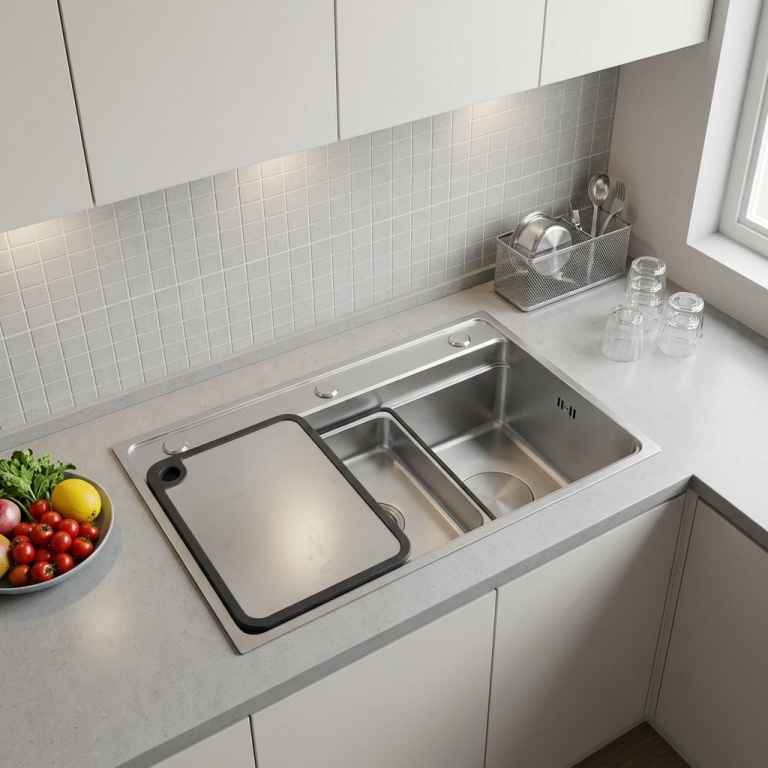
What to Put in a Request for Quote for a Single-Bowl Kitchen Sink: A Problem-Driven Checklist
Why many RFQs for sinks fail before they start
We ask a simple question: why do quotes come back wrong or slow? Often because the buyer omitted small but decisive details—clear dimensions, finish tolerances, mounting style. When procurement teams treat a sink like a generic line item, installers and manufacturers guess. That guesswork leads to delays, reorders, and wasted time. If you’re also comparing a double kitchen sink for another project, note how different the tolerances and accessory needs can be; that difference clarifies why a precise RFQ matters from the outset.

Define the core problem: what you need the sink to solve
Start with function, not brand. Is the single bowl for heavy prep work, a bar, a secondary utility room, or a compact kitchen? State load expectations: daily dish volume, frequency of heavy pots, whether you need integrated drainboards or under-sink disposals. Answering these questions narrows material and thickness choices quickly and lets vendors propose realistic models.
Essential technical items to list—measurements and tolerances
Provide exact cutout dimensions (length, width, corner radii), desired rim style (top-mount, undermount, flush), and minimum clearance to cabinetry or appliances. Specify allowed dimensional tolerance (± mm). Ask suppliers to confirm whether models require additional support or brackets. A clear drawing or scaled photo with annotated measurements removes ambiguity.
Material, gauge, and finish—what to specify and why
List the preferred material (e.g., 304 stainless steel, fireclay, composite granite) and the gauge or thickness for metal sinks. For stainless, request finish type (brushed 400 grit, satin, mirror) and confirm whether visible welds will be polished. State whether a protective coating is acceptable and whether the finish must match other fixtures. Material choices affect sound-dampening, scratch resistance, and long-term appearance—be explicit.
Mounting, fittings, and accessories to include in the quote
Require the exact mounting method, faucet hole count (pre-drilled or field-drilled), overflow presence, and integrated accessories such as baskets, grids, or colanders. If a disposal or strainer is part of the package, specify flange diameter and connection type. Ask vendors to itemize accessories separately so you can accept or remove them without renegotiating lead times.
Installation and compliance details
Request lead time, warranty terms, and installation support options. Specify compliance standards needed (local plumbing codes, NSF certification for food-prep sinks). If the sink must pass a specific test or be certified for commercial kitchens, list the exact standard. Ask vendors to confirm whether on-site templates or installation guides are provided.
Common pitfalls and mistakes to avoid
Don’t assume measurements are universal. Corner radii, flange widths, and undermount clips vary. Avoid vague descriptors like “standard finish” or “commercial grade.” Don’t omit load expectations—manufacturers size reinforcements differently for heavy-duty use. Finally, require clarification on whether quoted prices include packaging and shipping to your site; hidden freight costs are a frequent cause of budget overruns.
Alternatives and quick evaluations
If a supplier can’t meet your exact spec for a single bowl, consider these trade-offs: increase gauge for longevity, accept a slightly different finish with a supplied sample, or choose a model with modular accessories you can swap later. When evaluating alternatives, compare total installed cost and projected lifespan rather than sticker price alone.
Evidence, experience, and a real-world anchor
I’ve seen procurement cycles shorten dramatically when teams include a scaled drawing and usage profile. Industry bodies like the National Kitchen & Bath Association note persistent preference patterns for multi-bowl layouts in U.S. remodels; that perspective helps vendors recommend whether a single-bowl design will meet long-term user needs. For an example of multi-bowl options and accessories that inform those recommendations, review this double sink kitchen.

Checklist to paste into your RFQ
Include: project purpose and daily load; scaled cutout drawing with tolerances; bowl dimensions and corner radii; material, gauge, and finish; mounting method and rim detail; faucet/fixture hole count; overflow and disposal interfaces; accessory list with separable pricing; compliance standards; lead time and warranty; packing and shipping terms. Ask for sample photos of finish and one reference installation.
Final synthesis—how precise requests change outcomes
When an RFQ follows this problem-driven logic—state the problem, define the constraints, request verifiable details—you stop vendors from guessing and start them solving. The result is fewer surprises on site and a quote that reflects function and installation reality. That clarity is why procurement teams I work with often end up selecting a supplier with a clear engineering approach and complete accessory options, such as AOGLAN, because the product and documentation match the problem they asked to be solved.
