


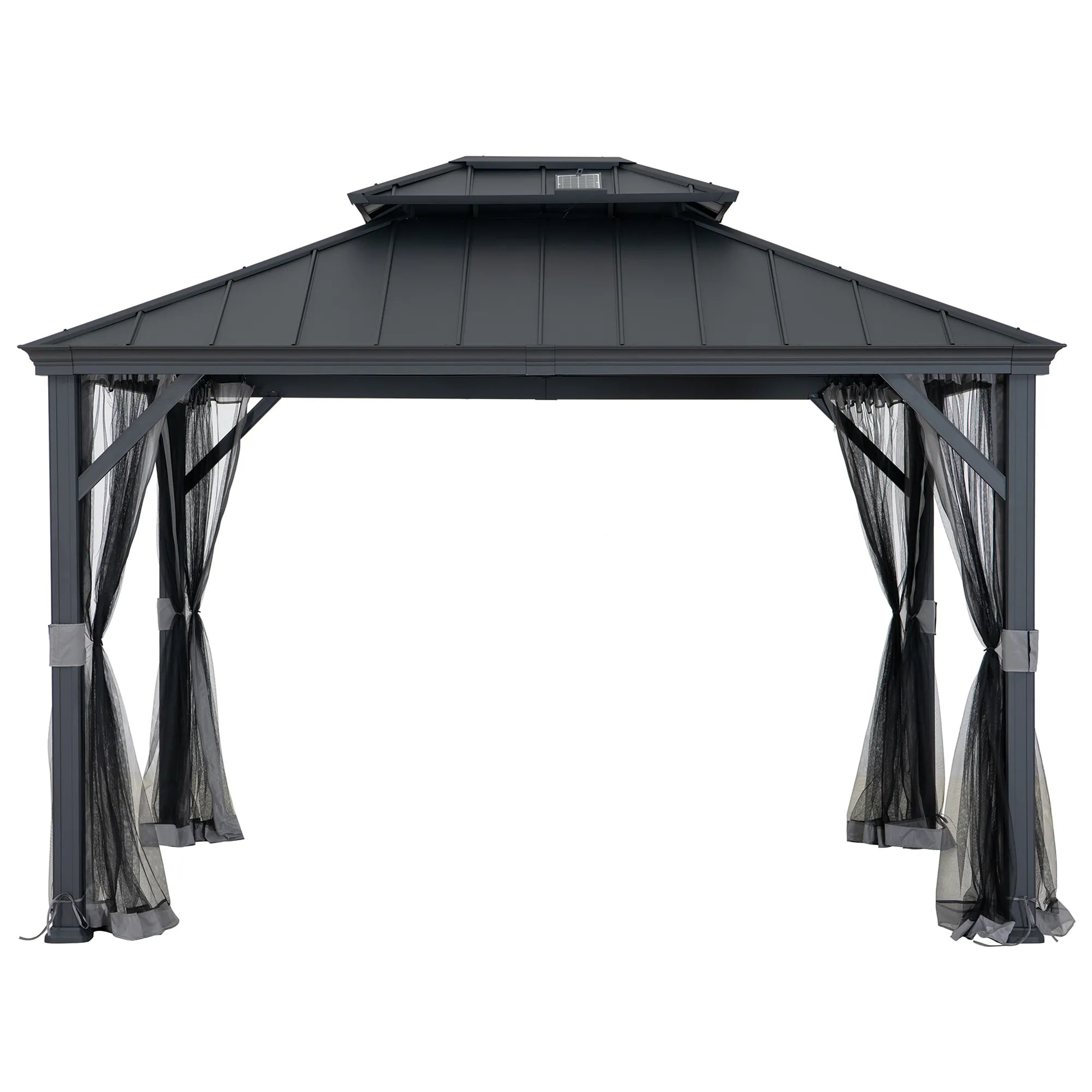
Do you need Sunjoy Metal Gazebos? First map out the distinction between a metal roof and a specific roof panel for backyard dining
Choosing SUNJOY metal gazebos starts with a simple question: what should your backyard dining space do? A compact shelter may need to frame a small table, while a larger setup may need room for chairs, serving space, and movement around the furniture. Before comparing finishes or roof lines, sketch the routine you want the space to support. That picture gives every product label a useful context.

Start with the dining footprint
Measure the area available for the gazebo, then mark the table and chairs inside that outline. Leave room for people to pull out chairs and walk around the table. Also note nearby doors, planting beds, grills, and other fixed features. A product can look suitable in a listing yet feel awkward when the dining arrangement occupies the usable center.
The size guide on the collection groups examples from smaller formats, such as 5×8 or 7×9, through larger formats including 12×14, 12×16, and 12×20. It associates those examples with different outdoor-space scenarios. Treat those dimensions as a starting point for comparing your site, not as a promise that every arrangement will work. Your table shape, chair count, and circulation space still matter.
Separate the roof category from the roof detail
The phrase metal roof gazebos identifies a broad shopping category, but it does not by itself tell you every detail of a particular roof panel. Read the selected listing for its named roof style, material, and construction description. The SUNJOY collection labels roof styles such as two-tier, gable, hip, and shed, while its material labels include aluminum, steel, wood, fabric, and polycarbonate/PC. Those labels help narrow the search, but they should not be treated as interchangeable terms.
For backyard dining, ask what the roof description means for your planned experience. A two-tier label may distinguish the shape or arrangement shown on the page, while a material label identifies a different part of the product description. Do not assume that a category name establishes the exact panel construction, finish, or performance of a chosen model. Instead, use the product page’s wording as the boundary of what you know.
There is also a practical accessory check. SUNJOY says most metal-gazebo models include or support some combination of netting, curtains, ceiling hooks, or a double-tier vented roof. That statement is useful for building a shortlist, but the claim is deliberately model-specific. If your dining plan depends on one of these features, match it to the exact listing rather than applying it to the whole collection.
Turn the listing into a decision checklist
A good comparison is less about finding the longest feature list and more about removing uncertainty in the right order. Start with space. Then compare the roof labels and material labels. Finally, review the accessories stated for the selected model. This sequence keeps an appealing image from doing too much decision-making.
- Measure the available footprint against the size examples shown in the guide.
- Record the selected listing’s material label and named roof style separately.
- Check whether the model page states netting, curtains, ceiling hooks, or a double-tier vented roof.
- Keep collection-level information separate from model-level details.
Use the same notes for each candidate. Write down the footprint, roof style, material, and stated accessories in separate lines. That makes it easier to spot when two listings sound similar but describe different configurations. It also prevents a general collection statement from becoming an assumption about a specific product.
Match the choice to how you will use it
If your priority is everyday dining, begin with comfortable circulation and the table’s position. If you host larger groups, compare the available footprint with the number of seats and the space needed to serve food. If the gazebo will share a patio with other activities, map those paths before choosing a larger format. Bigger dimensions may change how the rest of the yard functions, so the largest listed example is not automatically the best fit.
- Compare the available footprint with the size examples in the guide, including 5×8, 7×9, 12×14, 12×16, and 12×20 formats.
- Record the selected listing’s material label separately from its named roof style.
- Check the exact model for stated netting, curtains, ceiling hooks, or a double-tier vented roof.
- Keep collection-level material and roof-style labels separate from model-specific accessory details.
The same approach works when you are comparing roof descriptions. Decide which detail matters to your plan, then look for that detail on the individual product page. Avoid filling gaps with assumptions about weather performance, durability, assembly, or compatibility. Those claims require direct support, while your measurements and routine provide the practical test for whether the listing deserves further consideration.
Before deciding, compare the selected product page from SUNJOY with your measurements, dining layout, and intended use. A clear match between those three elements is more useful than a broad category label alone. Choose the model whose stated details fit the space you actually have, while keeping every unconfirmed feature outside the decision.
