


Introduction: The Gap You Can Close Today
Here’s the truth: speed without alignment wastes money. A shoe rack manufacturer can build fast, but retailers still miss turns when the line and the floor don’t speak the same language. Picture a launch week—pallets stack up, the display plan shifts, and two SKUs lag while one overperforms. Data shows carrying costs balloon when replenishment misses the window, and return rates climb when packaging fails in transit. So ask yourself: are you building capacity, or building clarity?
Let’s coach this. You want predictable lead times, clean fit-and-finish, and parts that pass a basic drop test without drama. You also want SKU density to match your aisle plan, not fight it. The delta between plan and reality is often small—millimeters in hole spacing, a missed torque spec on hardware, or a carton that fails a simple edge crush test. (Small things, big leaks.) The fix starts with shared metrics and a tighter loop between design and distribution. Ready to see where the strain really lives? Let’s move into the details and make them work for you.
The Deeper Layer: Why Shoe Rack Wholesale Trips Up Efficient Teams
Where Do Traditional Models Break Down?
In most shoe rack wholesale programs, the pain hides in handoffs. Traditional MOQs push more volume than the planogram needs. Hardware bags vary, so assembly times swing by minutes—per unit. And the powder-coating line chases color changes without quick-release jigs, which slows takt time. When QC relies on spot checks instead of a formal QC protocol with torque spec records, field failures spike. Look, it’s simpler than you think: mismatched packaging dimensions inflate freight class; missed salt-spray tests let corrosion creep in during coastal shipping—funny how that works, right?
Another blind spot: SKU proliferation outpaces shelf space. Retail teams ask for “one more finish,” but the bill of materials sprawls. That bloats inventory and kills cash flow. A technical reset helps. Lock material grades (e.g., cold-rolled steel for load-bearing tiers), standardize fasteners to reduce pick errors, and validate load capacity with a repeatable fixture. Tie carton sizes to pallet math, not guesswork, and bake EDI labels into the workflow. When the factory uses CAD/CAM updates to push the same hole pitch across variants, your assembly instructions shrink to one page. That’s not just neat; it’s scalable.
Comparative Path Forward: Systems That Outperform, Not Just Outproduce
What’s Next
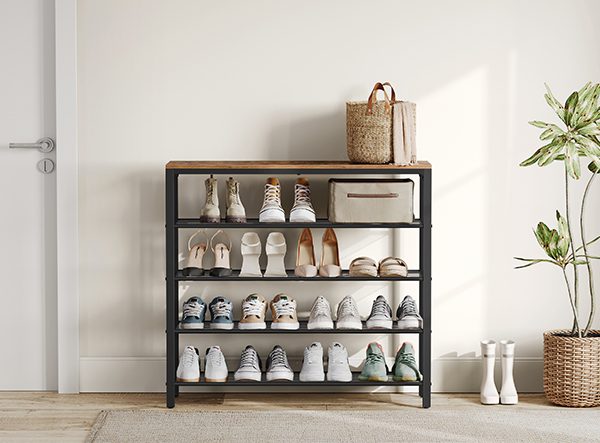
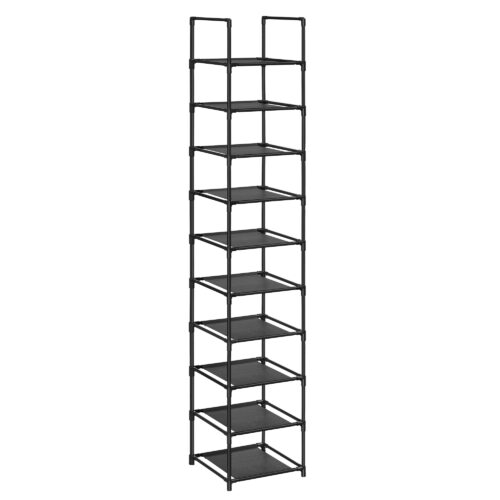
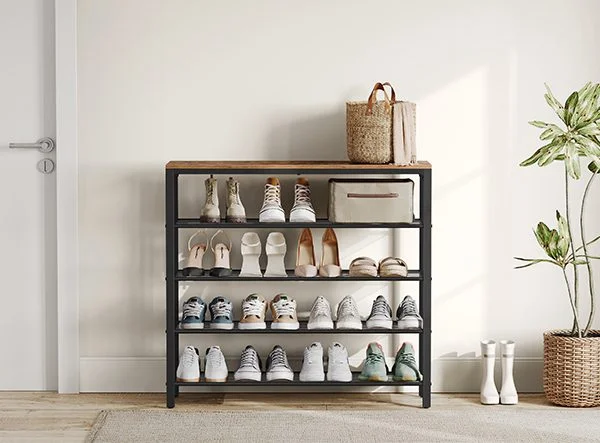
Let’s look ahead with a practical lens. Compared to legacy batching, a cell-based line with quick-change tooling reduces changeover waste and raises first-pass yield. New technology principles matter here: edge computing nodes on the line can log torque data at each station and flag outliers in real time. That keeps your fasteners tight and your returns down. Pair that with RFID totes for hardware kitting, and you’ll cut assembly variance by a third—solid, repeatable, calm. Now map this to merchandising: for shoe display racks wholesale, the win is a stable footprint, lighter cartons, and finishes that pass a 240-hour salt-spray benchmark. Semi-gloss black looks the same in store six months later—no surprises, no touch-ups.
Case example, simplified. A regional chain ran three finishes, two widths, and one telescoping model. They aligned BOMs across variants, capped MOQs by finish, and tied palletization to aisle resets. Lead time fell by 18%. Damage claims dropped after a carton redesign with higher edge-crush ratings—funny how that works, right? Here’s how you choose next: focus on three evaluation metrics that keep you honest. One, process capability: CP/CPK for hole pitch and tube welds so fit-up is consistent. Two, logistics physics: pallet efficiency and cube utilization per SKU, including carton ECT and ISTA drop test pass rates. Three, lifecycle value: verified load-bearing rating, corrosion resistance, and ease-of-assembly minutes per unit. Keep these tight, and your sell-through follows. For deeper collaboration and scale-ready builds, see SONGMICS HOME B2B.
