


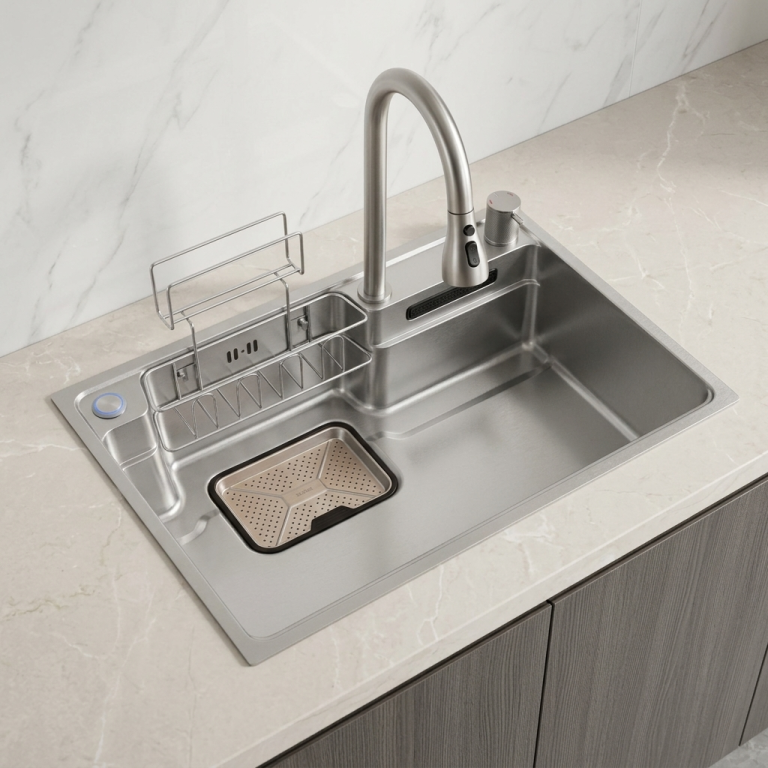
What to check before you buy a stainless steel undermount sink
Why most buyers get burned
Buying a sink sounds simple till the fit’s off, the finish scratches on day one, or the bowl rattles like a tin can. I’ve seen contractors and homeowners get stuck with tight lead times, wrong cutouts, and flimsy mounting hardware. If you’re dealing with kitchen sink manufacturers, push on the basics up front so you don’t eat the cost later.

The problem-driven checklist you can use on-site
Start with things that’ll bite you: steel grade (AISI 304 for most kitchens; 316 if you live on the coast), gauge (16 is thicker and quieter than 18), bowl depth and drain placement, flange width for undermount clips, and whether the sink has a factory template. Ask for actual measurements, not marketing blurbs. Check the finish — a true satin passes a hand rub test without fuzzy marks. Look under the bowl for sound pads or spray-on dampening and full undercoating; cheap ones skip that. Get photos of welds and seams. Confirm drain size (3.5″ vs 4″) and whether they supply an XLS or standard strainer. Demand packaging photos too; dented crates mean headaches on arrival.
Common pitfalls teams keep repeating
Buying by price alone. Not ordering a sample. Assuming “stainless” means the same thing everywhere. Overlooking tolerance for the countertop cutout. Skipping a check on edge finishing so the sink sits flush. Forgetting to confirm the mounting system matches your fabricator’s clamps and rails. Ignoring lead times during busy seasons — those delays cost labor and storage. Expecting the factory to automatically deburr and passivate unless it’s explicitly listed.
How to vet suppliers fast
Ask for factory photos, inspection reports, and a production timeline. Request an itemized sample invoice so you know what’s tested. Verify certifications — third-party test reports on material composition and finish are not optional. Request a small-batch run first. Get packing and pallet specs. Confirm whether the sink maker provides CAD templates or PDF cutouts. Use clear acceptance criteria: dimensional tolerance, surface scratch limits, packaging integrity, and functional checks like drain fit and clip strength.
Alternatives worth weighing
Composite granite: quieter, scratch-resistant, but heavier and harder to repair. Fireclay: classic look, great for farmhouse kitchens, but needs stronger cabinetry and careful shipping. Copper: antimicrobial, ages fast, needs maintenance. If you pick one of these, apply the same checklist: samples, mounting fit, finish, and shipping protection.
Real-world expertise, standards, and where buyers learn fast
I’ve inspected hundreds of sinks on jobsites and in factories. Professionals look for ASTM-compliant material notes and visible electropolishing on higher-grade pieces. At the Kitchen & Bath Industry Show (KBIS) I saw manufacturers highlight factory passivation and thicker gauges as selling points — those traits matter when sourcing wholesale sinks. Trust suppliers who can show traceable mill certifications for stainless and third-party testing; that beats a pretty brochure every time.

Final take — practical action that saves money
Don’t gamble on vague specs. Get a sample, verify grade and gauge, confirm drain and mounting compatibility, and set clear inspection checkpoints. Do that and the sink fits right, sounds solid, and lasts. That’s the kind of result I’ve started leaning toward when I specify AOGLAN.
