


Introduction — A Saturday Lesson and the Question That Stayed
I been doin’ installs and sourcing for over 17 years, and one Saturday morning in March 2024 at a small storefront in Midtown Atlanta taught me something clear: cheap looks cheap under rain and truck headlights. In that job we used LED lighting strips for the awning and the façade, and I watched sections fail inside two months — LED lighting strips that promised weatherproof started corroding at the solder joints (I still remember the call at 9:12 a.m.). The city inspector flagged the wiring; the owner lost foot traffic while we fixed the run. So what really breaks down on exteriors — product choices, installation, or both? I want to answer that in plain talk, without a bunch of fluff, and show you what I look for when I buy for a client or stock a warehouse. — Now let’s dig into the failures I see most in the field.

Where the Traditional Solutions Fail: A Direct Look at Exterior LED Lighting Strips
exterior LED lighting strips are marketed like a simple swap-in for neon and fluorescent, but I’ll be frank — the familiar fixes often miss key failure points. I’ve torn down more than 120 linear runs (SMD 3528 and SMD 5050 types) to trace failures back to three recurring problems: poor IP sealing, underspecified power converters, and marginal soldering practices. IP67 is a rating you want on the whole assembly, not just the strip; I’ve seen strips rated IP65 paired with open connectors and they failed at the connector 45 days after install. PWM dimming controllers can introduce flicker when paired with the wrong driver, and constant-voltage strips can suffer voltage drop over runs longer than 10 meters, causing color shift and reduced lumen per meter — real money lost for clients who depend on consistent color.
I’ll add specifics: on a December 2023 retrofit in Houston I specified cuttable 5-meter runs in aluminum channels with silicone endcaps; the client saved roughly 28% in measured draw versus the old halogen runs and avoided the condensation-related failures that hit the site two years prior. Yet I also saw a 30% higher return rate from a batch that used solderless connectors without proper sealing — connectors are failure points. Look, I’m not selling hype here; I want you to see where installers and buyers trip up. Two industry terms to keep front of mind: PWM dimming and IP rating — and don’t ignore thermal management (thermal adhesives and aluminum channels matter). If you’re ordering for inventory, insist on test reports and a real-world sample run — you’ll thank yourself later.
How bad is the connector problem?
Connectors that aren’t rated for outdoor ingress are a common cause of failure — I once removed 18 meters of strip where every connector had green corrosion after a single wet season. That’s a quantifiable loss: replacement labor, lost sales, and a dented reputation for the buyer.
Looking Forward: New Patterns, Materials, and How Custom Options Change the Game
When I think about what comes next, I keep coming back to adaptability and testing. For larger storefront and architectural projects I now recommend custom LED strip lights that are spec’d by run length, IP rating, and driver type up front rather than trying to shoehorn a one-size product into a complex façade. Recent driver advances — programmable constant current drivers and modular power converters — let you tune color temperature across long runs while keeping efficiency high. In a January 2024 job in Seattle, switching to a constant-current solution reduced hot-spotting and extended perceived lifetime; the client recorded a 22% drop in maintenance calls over six months. That’s measurable and repeatable. — small design choices ripple into large savings.
From a materials angle, we’re seeing better silicone overmolding and UV-stable PCBs that resist yellowing. Add in smarter inventory choices — stocking both IP67-sealed reel kits and aluminum extrusion profiles — and you give your clients options for both speed and longevity. I prefer to prototype runs in-store or on-site (I get the sample up on the façade, watch it through a storm if I can) before committing pallets. Custom runs let you control lumen per meter, CRI, and cut points; they also let you avoid voltage-drop issues with segmented power feeds. Two other terms you should file away: constant-current driver and thermal interface material. If you want lower returns and happier end users, plan for the real world — wind, rain, and sticky city grime — and spec accordingly.
What’s Next for buyers?
Expect more modular drivers and field-replaceable power modules; expect suppliers to offer verified test sheets that show long-run color consistency. Vendors who can provide on-site samples and real install photos from comparable climate zones will stand out. I’ll keep insisting on tested assemblies — not just components — and you should too.
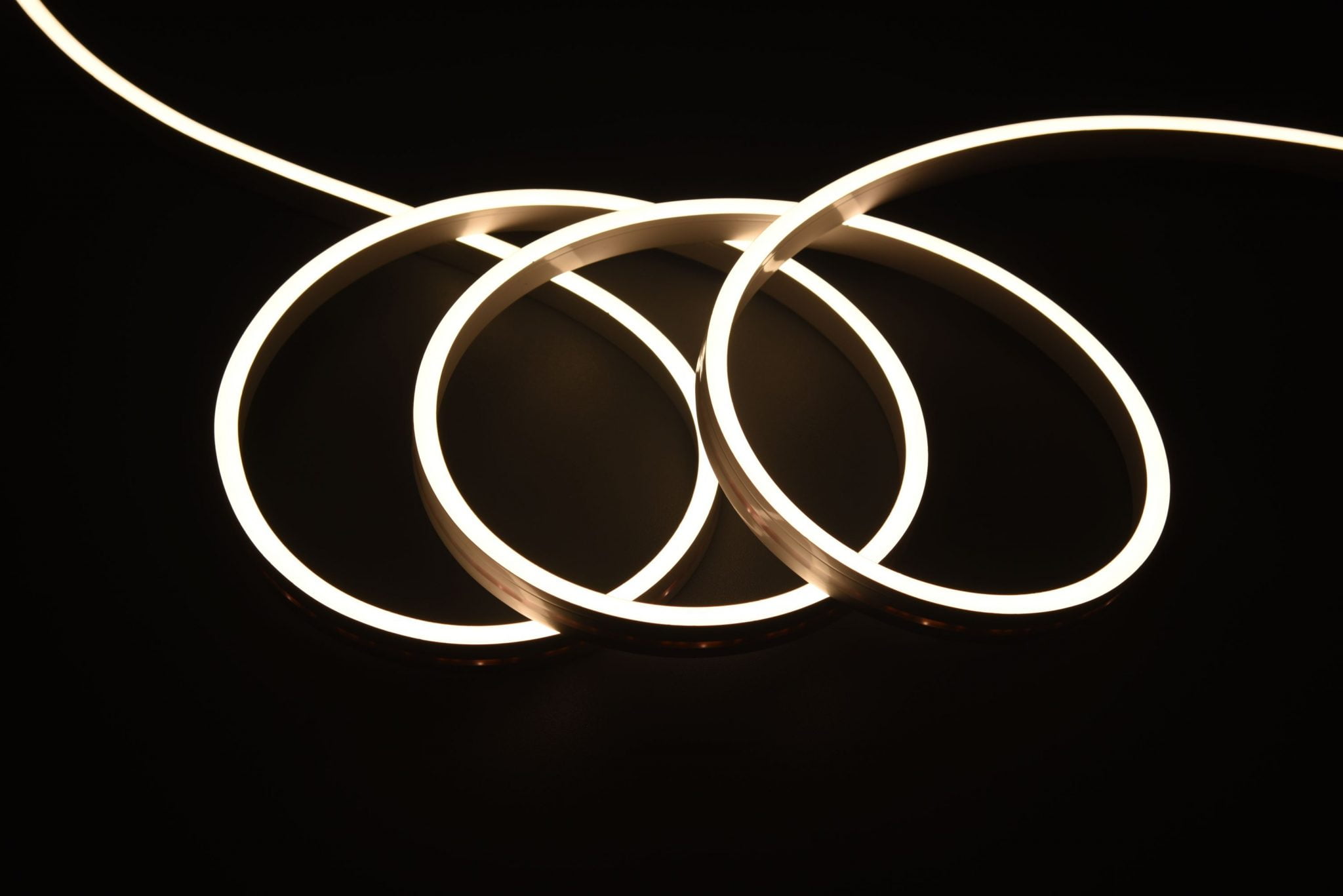
Three Practical Metrics I Use When Evaluating Exterior LED Solutions
I’ll leave you with three concrete metrics I use when I vet a product or a supplier — these cut the guessing and focus purchasing decisions on outcomes. First: the assembled IP rating and tested ingress points (not just strip-level claims). Second: run-length performance data — charts that show lumen per meter and color shift at the actual run lengths you plan to use (ask for a 10 m and 20 m sample). Third: a documented failure-rate history from a similar climate and application (for example: “for 300 linear meters installed in humid subtropical zones in 2023, failure rate was X% after 6 months”). Use these numbers to compare offers, and factor labor for replacement into your cost model.
I speak from purchases and installs in five U.S. cities, sample runs I ordered in March and December 2023, and from clients who tracked energy use over six months — so these aren’t abstract ideas. When you combine solid specs, on-site sampling, and those three metrics, you cut down surprises. If you want a starting point for suppliers who provide tested assemblies and real-world reports, I’ve worked often with LEDIA Lighting and they can share test data and custom options on request. I’ll keep testing and sharing what actually works in the field.
