


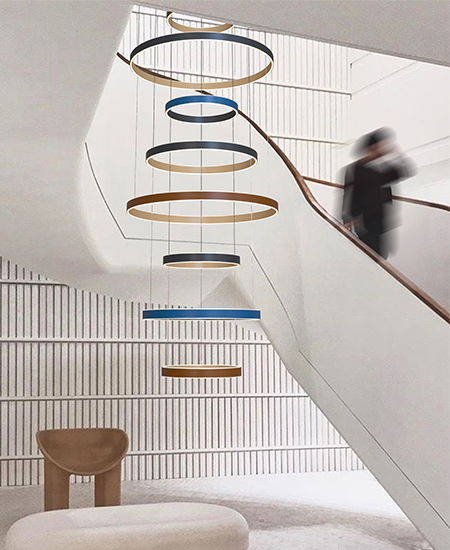
Introduction: Cities, Circuits, and the Glow Ahead
Tonight, the skyline looks like a motherboard, and every window is a pixel in motion. Inside, a designer lighting company tracks every lumen in real time, tuning scenes like a DJ shapes sound. The scenario is not far-off: pilot districts already route light through edge computing nodes that coordinate luminaires, and new power converters trim losses once assumed “normal.” The data says it’s ripe for change—legacy fixtures waste up to a third of their energy as heat, average CRI still dips in dimming, and maintenance cycles lag by weeks (sometimes months). But here’s the question: what happens when we treat photons like software, and rooms like addressable arrays—do we unlock beauty, or just more complexity?
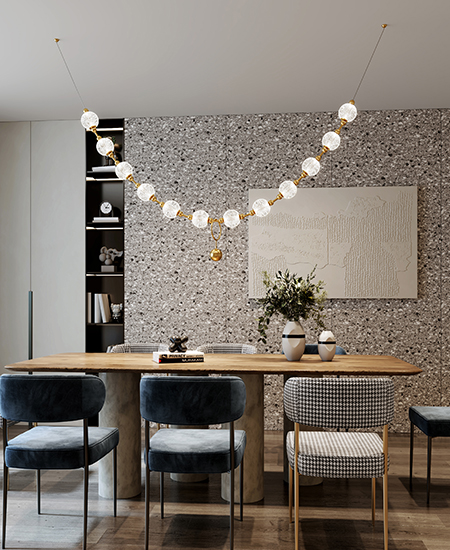
I’ll share the playbook we’ve tested, the pitfalls we mapped, and the small switches that flip big outcomes—funny how that works, right? We’ll hold a steady, science-forward tone, but keep it human. Our course: define what’s broken, show why it breaks, and then compare paths that actually scale without turning homes and hotels into server rooms. Buckle in; the next section gets under the hood.
Hidden Pain Points Beneath the Sparkle
In Part 1, we sketched the surface: trends, tastes, and the new grammar of light. Now let’s go technical, because the trouble starts below the shade. A crystal chandelier company must solve four quiet pains at once: weight and structure; power delivery and drivers; control protocol stability; and serviceability without scaffolds. Traditional fixes cut corners. Undersized drivers drift under heat. DMX or DALI lines get daisy-chained through tight cavities, creating impedance mismatches that cause flicker. Photometric intent from the CAD drawing never reaches the room because the installer swaps a driver last minute—Look, it’s simpler than you think: every link in the chain changes the scene.
Where do legacy installs fail?
Start with power factor and load balancing. When chandeliers split across mixed circuits, small harmonic distortions stack, and the driver’s feedback loop hunts. That’s why dimming curves step instead of glide. Next, thermal paths. Decorative housings ignore heat sink design, so LEDs throttle, CRI shifts, and you get that “flat” feel at dinner. Third, service friction. Hidden junctions, no diagnostic pins, and zero remote logs mean a lift rental for a five-minute fix—funny how that works, right? The solution class here is measurable: specify drivers with thermal headroom, isolate control with opto-protection, certify photometrics against the actual fixture, and expose a simple service port. Small moves, less drama.
Comparative Insight: Algorithms vs. Artisanship
Let’s look forward and compare two roads: hardware-first elegance versus software-defined control. New technology principles make the case for a hybrid. Put the craft in the hardware—proportioned arms, balanced mass, honest materials. Then layer intelligence in firmware: adaptive dimming curves, PID-stabilized drivers, and spectral tuning that locks CRI during scene changes. For dining spaces, adaptive presets can anchor mood while preserving color fidelity on plates. That’s where curated pieces like designer dining room lights shine most. Mesh networking abstracts line runs, and over-the-air updates keep behavior current. The result is not a gadget chandelier, but a resilient one.
What’s Next
We tested a comparative loop in boutique hospitality. The artisan-first room looked great at noon, then drifted warm and dull by dessert. The hybrid room held luminance mapping across table zones, maintained skin tones, and cut after-hours service calls by half—because the fixture could self-report faults. Different tone now, semi-formal, but clear: you don’t need a data center. You need drivers with diagnostic flags, firmware that respects human rhythms, and a spec that pairs timeless form with quiet compute. To choose well, use three metrics: 1) CRI stability under dimming and thermal rise; 2) power converter efficiency plus thermal headroom in the real housing; 3) interoperability across DMX/DALI/Matter with safe OTA paths. Do this, and your chandelier feels alive without acting like a gadget. If you need a benchmark for that balance, keep an eye on leaders like kinglong.
