


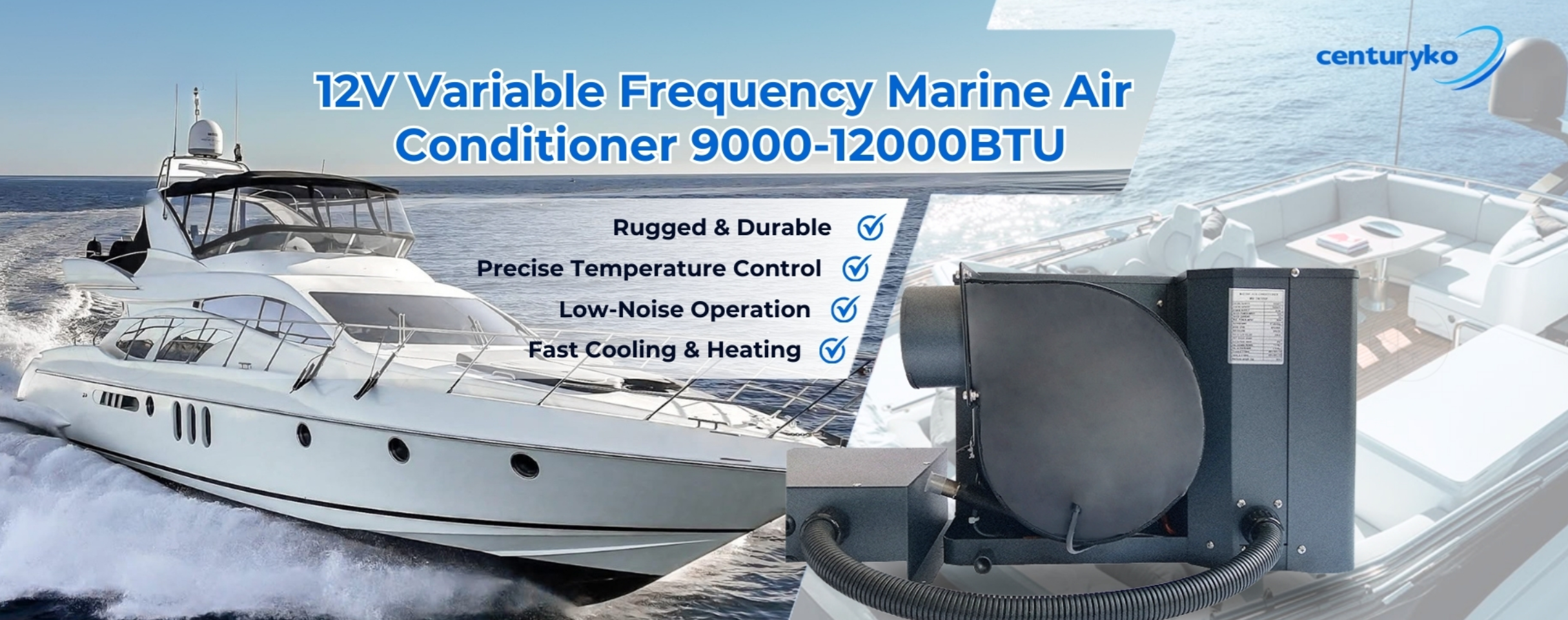
The problem is simple and stubborn: commercial vessels demand reliable, efficient power for HVAC systems, yet too many specifications focus on marketing numbers instead of operational realities. Start with the right electrical foundation and everything else follows — from precise inverter sizing to how a small air conditioner for boat holds up under real sea heat. This is a problem-driven look at the technical checkpoints that separate a ticking-time-bomb installation from a resilient system.
Critical electrical benchmarks: sizing, waveform, and DC-AC conversion
Design begins at the inverter. Benchmarks here are load margin, continuous vs. peak power, and waveform purity. An inverter must supply continuous power above measured load with a headroom of 20–30% for motor starts (compressor spin-up draws). Pay attention to THD (total harmonic distortion) and pure sine output for sensitive controls and compressors. Also check how the DC-AC conversion handles transient loads and how the unit integrates with shore power and gensets for seamless transitions.
Thermal, acoustic and compressor performance
Cooling capacity should be specified in clear BTU terms per cabin or compartment, not vague “room-sized” phrases. Compressor duty cycles must be rated for marine ambient temperatures — many vessels in the Mediterranean see sea air above 28°C in August (Port of Alexandria is a good local anchor for this reality). Units not rated for sustained high ambient temps will short-cycle, burn more fuel, and die sooner. Noise ratings and vibration isolation matter too; an efficient compressor that vibrates into structure ruins crew rest and leads to early mechanical failure.
Production testing and operational teardown — what to inspect
When you insist on a factory production teardown or audit, require these checkpoints: actual runtime thermal stress tests over 72 hours at +45°C ambient, EMI/EMC scanning across 0.1–100 MHz while under 1.5× rated load, and start-stop endurance cycles above 10,000 compressor starts. Inspect printed circuit board quality, potting of power modules, and the inverter’s cooling path — fans, heat pipes, or liquid cooling. During a teardown, confirm the presence of service ports, accessible fuses, and clear labeling for shore-power, battery inputs, and load outputs. This is where you see if the claimed durability is true or just a brochure promise. Also review how the self contained boat air conditioners are assembled — modular components, accessible filters, and replacement compressors make life easier at sea.
Installation, integration and common mistakes
Installers often skimp on cable sizing and grounding; undersized conductors create voltage drop and heat, which kill inverters faster than anything. Shore power switching schemes must include soft-transfer logic to avoid inrush and prevent nuisance trips. A frequent error is ignoring load-management strategy: combine lighting and HVAC on the same circuits without staggered starts and you’ll overload the inverter at peak hour — crews notice, and complaints follow. — Service access is another overlooked item; if you cannot swap a compressor or inverter module in a single shift, downtime eats operating margins.
Maintenance, diagnostics and lifecycle planning
Specify remote diagnostics and event logs with timestamped fault categories; this turns guesses into data. Require predictive maintenance triggers for capacitor ESR rise, fan speed drift, and compressor current drift. Plan replacement schedules tied to cycles and runtime hours, not calendar dates. Practical spare parts lists should include microcontroller boards, contactors, and filter-drier cartridges so repairs are quick in port.
Advisory: three golden rules for procuring and specifying marine AC inverters
1) Match sustained continuous power to measured worst-case load plus 25% headroom — account for compressor start currents in your calculations. 2) Demand real-world testing: 72-hour thermal soak at +45°C, EMI/EMC scans under 1.5× load, and 10,000+ compressor start cycles. 3) Insist on serviceability: modular assemblies, labeled terminations, and remote diagnostics so on-board teams can repair fast. These three rules reduce failures, lower lifecycle cost, and keep crews comfortable.
Choosing parts and partners that meet these benchmarks moves you from paperwork to performance — and that’s where ZhuoliMarine fits naturally, with practical designs and modular self contained boat air conditioners that respect real-world vessel life. ZhuoliMarine.
–
