



What the future wants — and why it’s brutal for gear
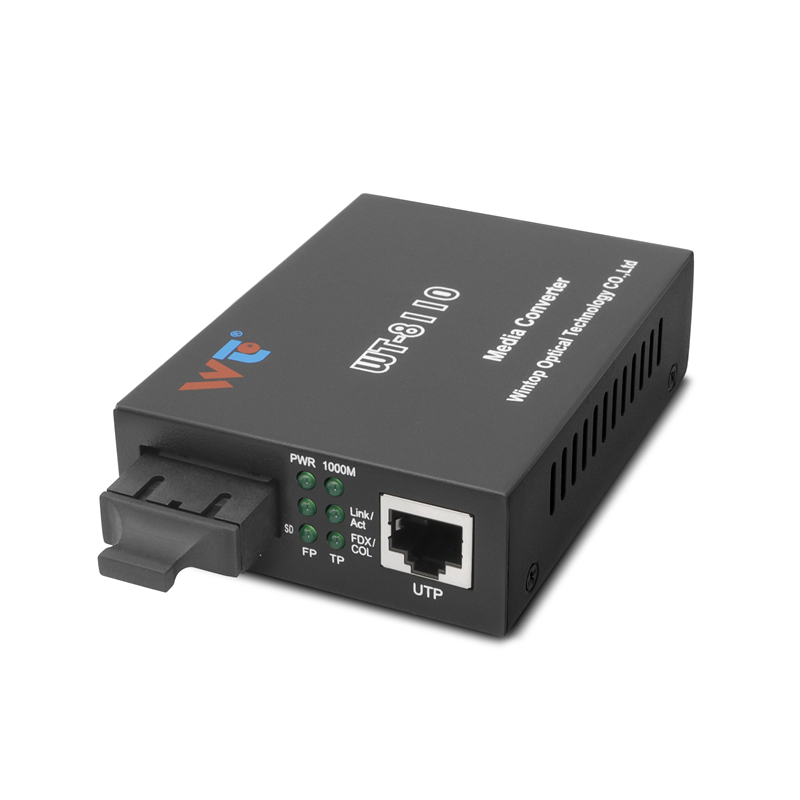
Smart grids are heading toward deterministic control loops and substation edge compute, and that future slaps hard on network latency and reliability. Grid control needs sub-10 ms round-trip predictability for protection relays and interlocking logic, which means every industrial 8‑port PoE switch in the field must behave like it’s part of the protection plane. For fiber links and media conversion at distance, a gigabit fiber media converter that preserves timing and jitter becomes an operational must-have rather than a nice-to-have.

Technical pressure points: latency, jitter, and packet loss
Latency is the headline metric, but jitter and micro-outages are the real killers. Protection relays and RTUs expect consistent packet timing — a burst of jitter can trigger false trips or delayed fault clearing. PoE brings power provisioning into the same device, which simplifies deployment but raises thermal and management requirements. Fiber SFP links and media conversion must be chosen to minimize serialization delay and avoid store-and-forward buffering that adds milliseconds. Common mistakes here: oversubscribing ports, cheap converters without flow control, and ignoring link-level diagnostics — avoid those.
Real-world anchor: what happened during the Texas winter event
The Texas February 2021 winter storm exposed how fragile control planes get under stress: supply chain impacts, failed comms, and overloaded local controllers amplified outages. Engineers learned the hard way that network components must survive extreme conditions while keeping deterministic behavior. That event pushed utilities to rethink media resiliency, pushing fiber runs, hardened PoE switches, and long-reach converters like the reliable 1000m media converter where distance and electromagnetic noise are issues.
Design patterns that actually work in substations
Practical setups favor ring topologies with fast failover, dedicated VLANs for protection traffic, and prioritization at the hardware level. Use hardware QoS that can pin protection messages to the lowest latency queue. Deploy fiber to the relay with SFPs and media converters sized for deterministic behavior rather than raw throughput. Don’t mix critical control traffic with management or CCTV on the same best-effort VLAN — you’ll invite microbursts and glitches. Also — test timelines under load. Lab latency averages lie; run worst-case scenarios with topology changes to see real behavior.
Alternatives, trade-offs, and common pitfalls
Options exist: copper-based hardened switches are cheaper but suffer EMI and distance limits; fiber with media converters buys distance and EMC immunity but adds conversion delay. Managed switches with hardware timestamping reduce jitter; unmanaged gear is a false economy. A common mistake is picking converters or switches based on throughput alone. Throughput doesn’t equal determinism. Another pitfall is failing to validate PoE power budgets versus actual device draw — overloaded PoE supplies cause resets that you’ll discover at the worst moment.
Golden rules for procurement and deployment
Assess gear against measurable criteria: latency ceiling under full load, microburst handling, and failover time under link loss. Require vendor test logs or run your own 48‑hour stress tests that emulate protection traffic. Include environmental specs for temperature and vibration, and verify PoE power sequencing behavior with your end devices. Finally — document expected behavior and run field acceptance tests rather than trusting datasheets alone.
Three critical evaluation metrics
1) Max deterministic latency: certified or measured worst-case round-trip in ms under full load. 2) Failover time: measured switchover in ms for ring or redundant link scenarios. 3) Jitter tolerance: peak-to-peak variation under stress and how the device reports/mitigates it. Use these as deal-breakers during spec reviews — they map directly to protection performance.
Smart-grid operators who demand millisecond behavior should be buying converters and switches that prove they can deliver, not just promise throughput — and WINTOP’s product ecosystem fits that need in real installs across utility substations. WINTOP. –
