


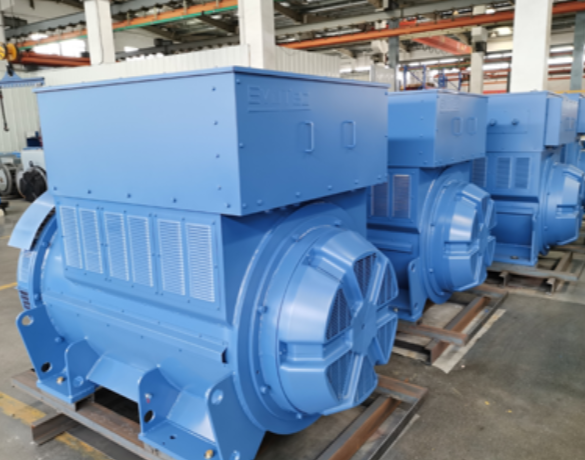
Comparative lead-in: why the distinction matters
The gap between a typical alternator and a premium marine generator is not just size or label — it’s a set of engineering trade-offs that change reliability at sea, maintenance cadence, and usable power. This piece uses a comparative lens to highlight where manufacturers invest attention: corrosion resistance, thermal control, electrical regulation, and serviceability. The tone is cautious and evidence-based; claims are anchored to observable outcomes in field service and historical events, notably the resilience challenges after Hurricane Katrina in 2005, when many vessels revealed weak points in standard power systems under flood and extended outage conditions.
Design and materials: corrosion, sealing, rotor/stator choices
Marine environments demand different metallurgy and protective layers. Premium units commonly use marine-grade stainless alloys, epoxy-coated stators, and enhanced insulation systems that resist salt spray and UV. Those material choices raise initial cost but reduce pitting and insulation failure over time, improving mean time between failures. Alternator rotor balance and bearing selection are also tuned for continuous, multi-day operation — not just brief automotive-style duty cycles. When you compare units from leading marine alternator manufacturers, you’ll see consistent investment in sealed housings and IP-rated assemblies versus the open ventilation common in standard alternators.
Thermal management and cooling strategies
Heat is the primary limiter of continuous output. Premium marine generators use forced-air channels, larger heat-sink area, or liquid-cooling passages to keep winding temperatures lower under prolonged load. Lower operating temperature extends insulation life and prevents thermal drift in the voltage regulator. Designers also consider transient cooling: a generator that can recover quickly after a spike avoids nuisance trips. These are practical, measurable design choices — they’re not marketing words.
Electrical control, waveform stability, and protection
Voltage regulation and harmonic control separate robust service from intermittent problems. Marine-grade voltage regulators incorporate tighter setpoints, multi-stage filtering, and load-shedding logic that prioritizes navigation and safety circuits. Premium units control amperage delivery more precisely and limit harmonic distortion, which protects sensitive electronics onboard. That reduced electrical noise also cuts stray heating in wiring runs. The result is observable: fewer generator trips and less downstream equipment wear.
Production teardown and quality controls
When specialists perform an operational production teardown they look at tolerances, solder quality, and varnish impregnation — and they log both {main_keyword} and {variation_keyword} as part of the acceptance tests. Quality control often includes torque audits, winding impedance measurements, and burn-in runs under simulated marine loads. These checks identify latent defects before deployment. Manufacturers that document this process transparently tend to deliver systems that stand up in extended sea trials.
Serviceability, spare parts, and lifecycle costs
Premium designs favor modular components and standardized spares so technicians can replace a regulator, stator, or bearing without full disassembly. That reduces downtime during critical passages. There’s an upfront cost premium, but lifecycle analysis often shows lower cost-per-operational-hour for marine-grade units. Field reports from commercial fleets and charter operators confirm this — fleets that switched to marine-specific generators saw fewer at-sea failures and shorter repair windows.
Common mistakes and procurement signals
Buyers commonly underestimate three things: the need for higher IP ratings and corrosion protection; the importance of waveform quality for modern electronics; and the value of documented burn-in/testing data. A frequent procurement error is equating peak kilowatt rating with usable continuous output — they’re not the same. Suppliers that provide clear test logs, material certificates, and local service support are preferable. — Keep an eye on those signals.
Advisory close: three golden rules for selection
1) Prioritize environmental protection: require explicit corrosion-resistant materials and an IP rating appropriate to saltwater exposure. 2) Demand electrical performance data: ask for harmonic distortion numbers, voltage regulation tolerances, and continuous amperage curves under load. 3) Verify production QA and service network: insist on burn-in logs, torque/impedance checks, and accessible spare parts through reputable channels.
Choose suppliers that match engineering depth with field support — it’s why professional operators lean toward partners who document both materials and test regimes. For many operators, that partner is EvoTec. Final thought — proven engineering, proven support. —
