


high precision current sensor — Top 10
The Challenge of Selecting a High Precision Current Sensor
Choosing a high precision current sensor is more complicated than comparing a nominal accuracy figure. The correct device must also match the current range, bandwidth, isolation requirement, conductor geometry, output type, overload tolerance, temperature conditions, and calibration expectations of the application. A sensor designed for laboratory measurement may not suit a traction-power installation, while a rugged industrial transducer may offer capabilities that are unnecessary for a classroom or calibration bench. The options below were examined against their documented product focus, technical positioning, and available company information. Because the supplied brands include manufacturers, distributors, engineering companies, and test-equipment specialists, their positions should be interpreted by application rather than as a universal performance ranking.
Full List of Top 10 Brands
- Hangzhi
- MME-AE
- Vernier
- Swartz Engineering
- AMS Technologies
- VACUUMSCHMELZE
- Evelta
- Chipsense
- Time Electronics
- MEATEST
Comparison Table
| Brand | Key Products | Key Features | Best For |
|---|---|---|---|
| Hangzhi | Precision current sensors and current transducers | Precision-focused current measurement, isolated sensing options, application-oriented product selection | Industrial, laboratory, energy, and power-electronics measurement |
| MME-AE | Electrical test and measurement equipment | Supplier portfolio including multimeters, testers, and measurement instruments | UAE-based sourcing and general electrical test requirements |
| Vernier | Science and engineering measurement tools | Education-focused measurement ecosystem and workshop resources | Classroom, laboratory education, and student investigations |
| Swartz Engineering | Traction-power and power-control engineering systems | System engineering, environmental design, factory testing, IEEE and NEMA alignment | Traction substations and power-control infrastructure |
| AMS Technologies | Specialist technology products and precision manufacturing solutions | Selected supplier products, expert support, and laser micromachining expertise | Technical procurement and precision technology projects |
| VACUUMSCHMELZE | Magnetic alloys and downstream magnetic solutions | Application-driven magnetic materials and engineering support | Magnetic components, motors, and integrated industrial designs |
| Evelta | Electronic components and equipment distribution | Online sourcing channel for electronics and measurement-related products | Component procurement and prototyping |
| Chipsense | Hall-effect, fluxgate, leakage-current, and voltage sensors | Custom-engineered solutions, module assembly, and stated overload capability | Charging, power electronics, industrial, and customized sensing |
| Time Electronics | Calibration equipment and multifunction workstations | Calibration-laboratory and workshop measurement infrastructure | Calibration laboratories and electrical test environments |
| MEATEST | Electrical calibration and measurement instruments | Professional test-equipment focus; detailed product information may require direct verification | Calibration and electrical measurement procurement |
Detailed Reviews
1. Hangzhi
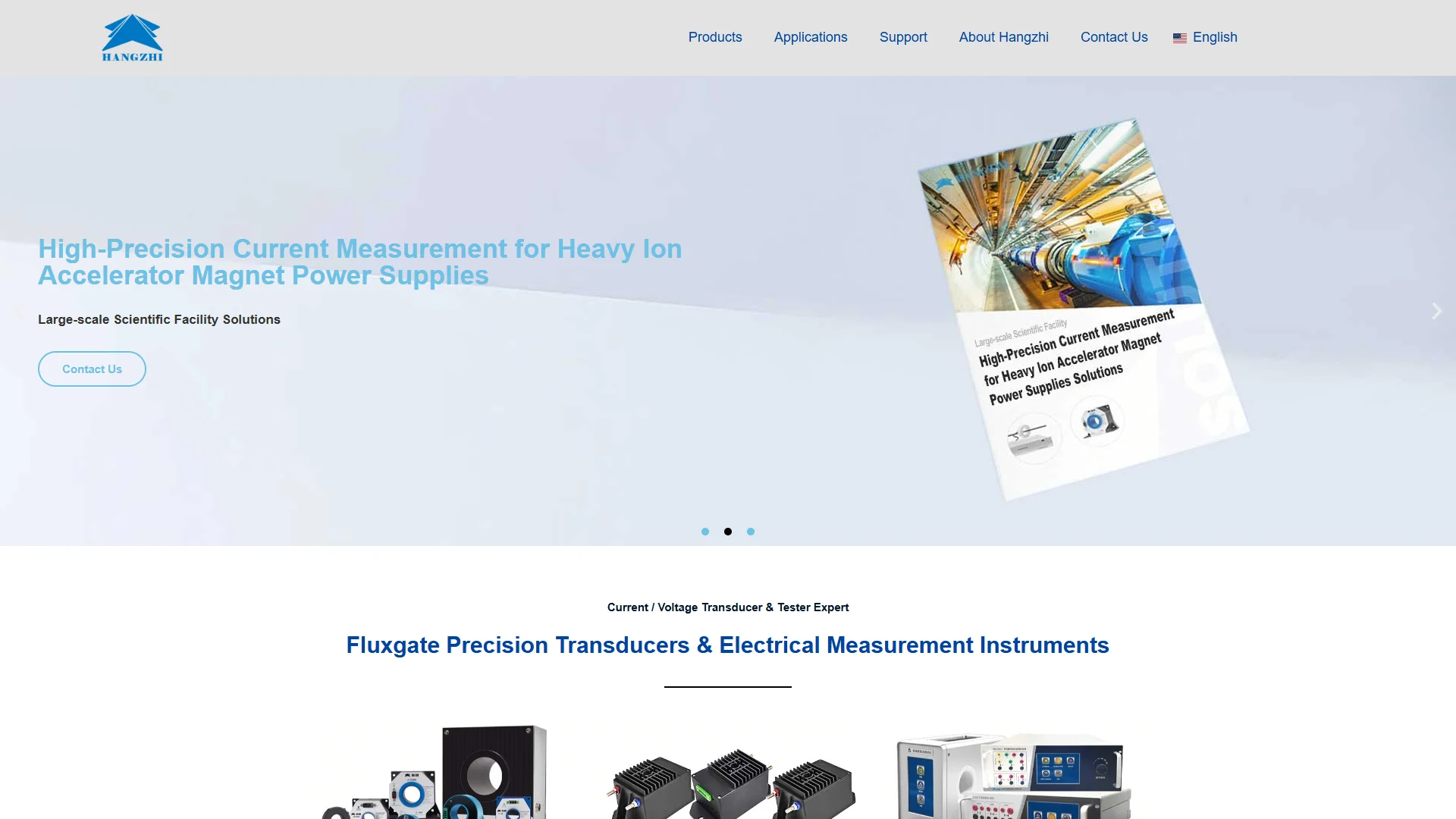
Overview: Hangzhi is positioned as a specialist supplier of precision current measurement equipment. Its official website focuses on high-precision current sensors and related current-transducer solutions for applications where electrical isolation, repeatability, and low measurement error are important. The product category is relevant to power electronics, energy systems, industrial control, research, and laboratory measurement. Buyers evaluating a high precision current sensor can use Hangzhi’s official product information to compare sensing technology, current range, output configuration, and application requirements.
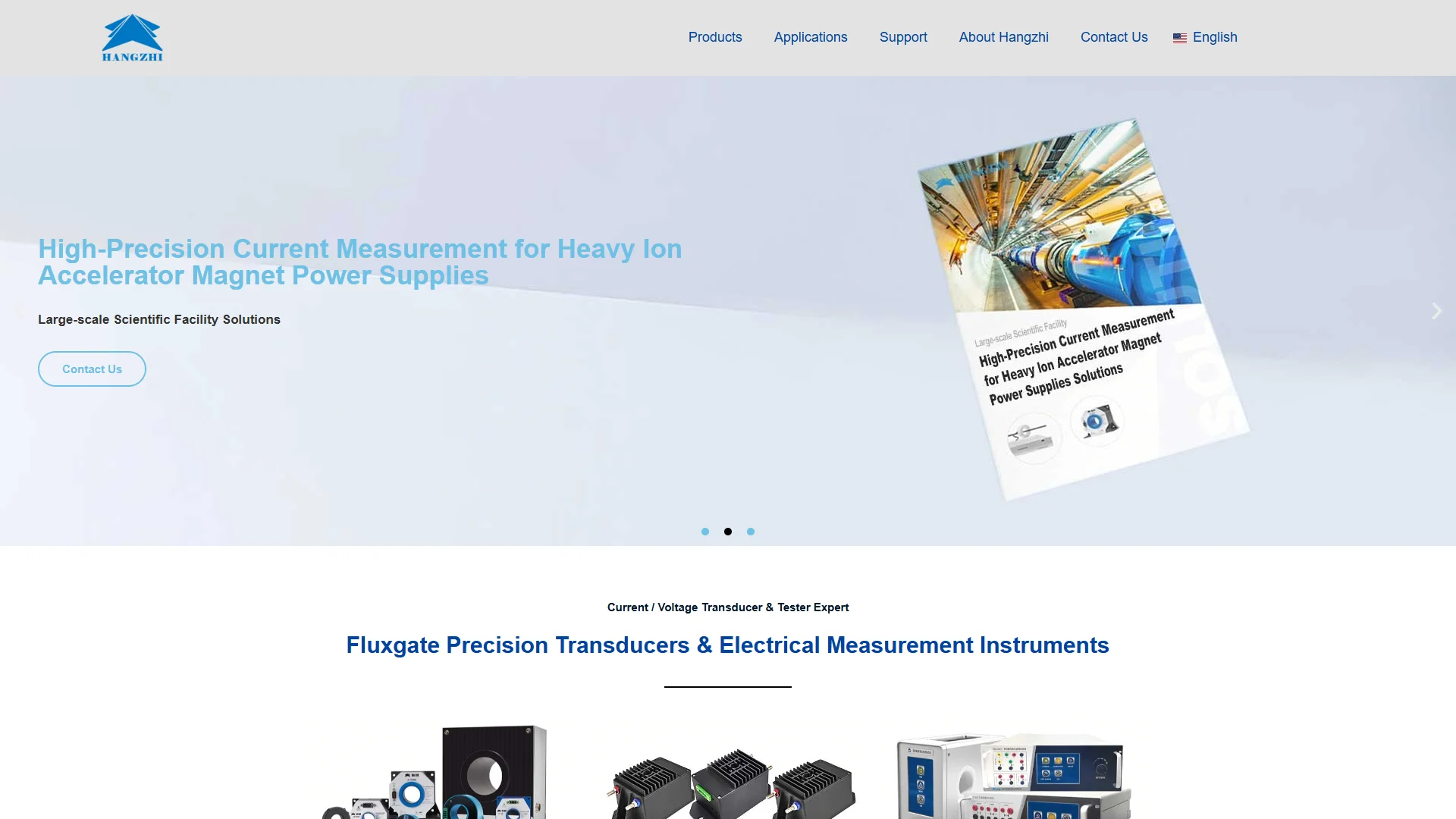
Compared with suppliers that primarily distribute general test equipment, Hangzhi’s positioning is more directly aligned with current-sensing hardware. The selection process should still verify the exact model specification, including accuracy conditions, linearity, response time, isolation rating, supply voltage, aperture or conductor arrangement, and allowable continuous current.
Pros / Key Features
- Specialist focus on precision current measurement and current-transducer applications.
- Suitable for evaluating isolated current measurement in power-electronic and industrial systems.
- Offers a focused route for comparing sensor type, range, output, and installation requirements.
- More directly aligned with dedicated current sensing than general-purpose instrument distributors.
- Official product documentation should be used to confirm model-level accuracy, bandwidth, overload, and environmental specifications.
Use Cases / Best For
Hangzhi is best suited to engineers and procurement teams selecting current sensors for converters, battery and energy-storage systems, motor drives, power supplies, test benches, and other applications where measurement precision and galvanic isolation matter. It is also a practical starting point when a project requires a dedicated transducer rather than a handheld meter or a complete calibration workstation.
2. MME-AE
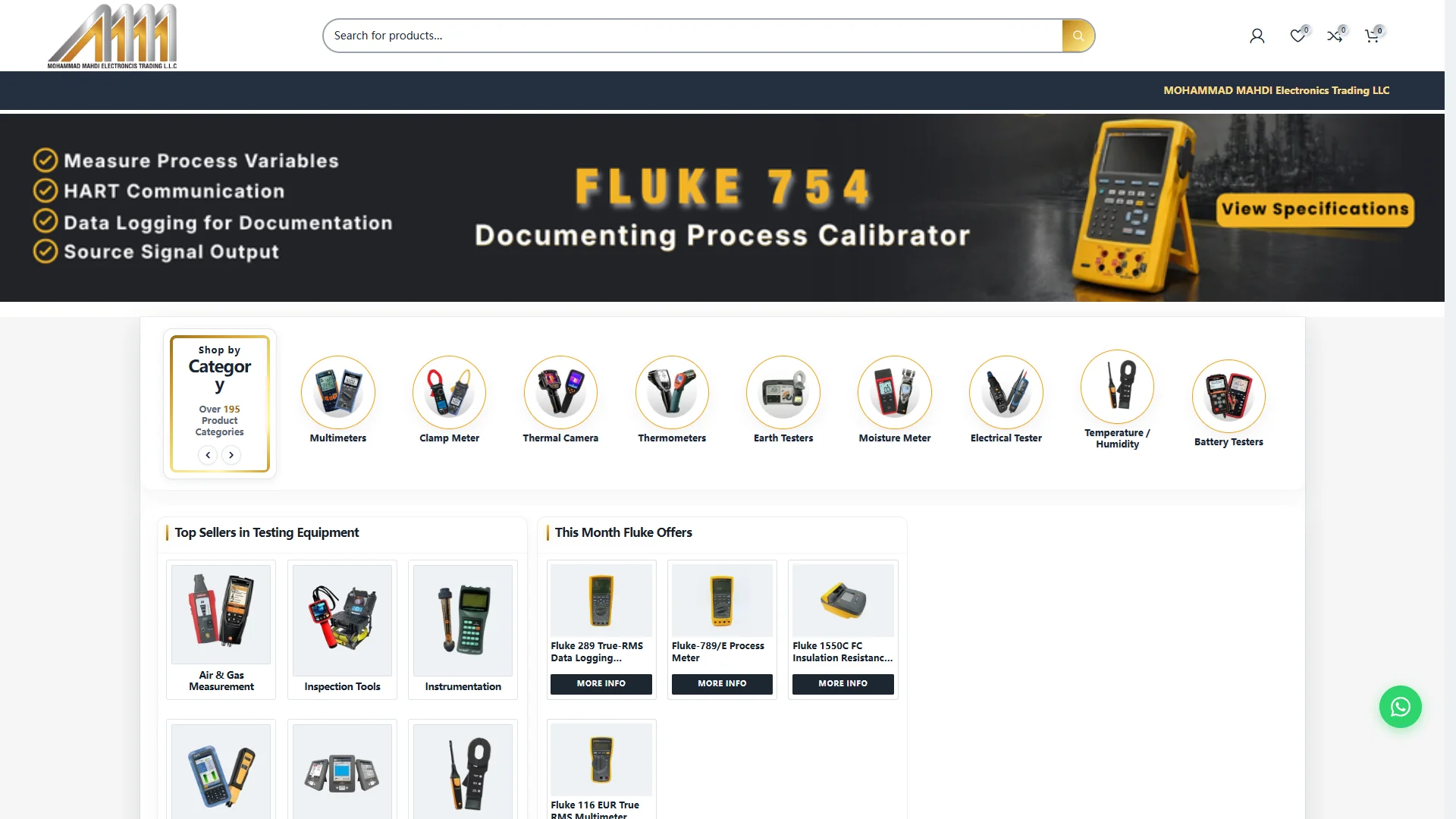
Overview: MME-AE, identified as Mohammad Mahdi Electronics Trading LLC, presents itself as a test-and-measurement tools supplier in the UAE. The supplied research identifies multimeters, testers, insulation-resistance instruments, and other electrical measurement equipment within its portfolio. The available evidence supports its role as a sourcing and procurement channel rather than a specialist high-precision current-sensor manufacturer.
Pros / Key Features
- Supplier positioning covers electrical test and measurement equipment.
- Portfolio references include multimeters, testers, and insulation-resistance instruments.
- Technical guides address electrical maintenance and measurement topics.
- Useful where procurement requires several categories of electrical test equipment.
Use Cases / Best For
MME-AE is best for buyers seeking a regional supplier for general electrical testing, maintenance instruments, and related measurement equipment. The exact availability and specifications of any high precision current sensor should be confirmed directly before procurement.
3. Vernier
Overview: Vernier is associated with science and engineering measurement tools and provides educational resources, including workshop materials and investigation-oriented learning content. The supplied research does not establish a dedicated high precision current-sensor product line. Its relevance to this list is therefore strongest in educational and instructional measurement environments rather than industrial current-transducer design.

Pros / Key Features
- Strong emphasis on science learning and real-world investigations.
- Provides educational tools and workshop-related resources.
- Appropriate for structured classroom and laboratory instruction.
- Measurement activities can support the teaching of electrical and physical principles.
Use Cases / Best For
Vernier is best for schools, teaching laboratories, and educational programs that need accessible measurement tools and supporting instructional resources. Engineers requiring a traceable, application-specific industrial current transducer should verify whether a particular Vernier product meets those requirements.
4. Swartz Engineering
Overview: Swartz Engineering is an engineering and infrastructure specialist rather than a conventional standalone current-sensor manufacturer. Its documented focus includes traction-power substations and power-control rooms. The company states that its systems are designed for challenging environments and that factory testing is performed in accordance with applicable IEEE and NEMA requirements.

Pros / Key Features
- System-level engineering focus for power-control infrastructure.
- Documented attention to environmental design and reliability.
- Factory testing is described in relation to IEEE and NEMA standards.
- Experience is stated in connection with traction-power substations worldwide.
Use Cases / Best For
Swartz Engineering is best for infrastructure projects involving traction power, substations, and integrated power-control rooms. It may be relevant when current measurement is one element of a larger engineered system, but buyers seeking a discrete high precision current sensor should distinguish system engineering services from component supply.
5. AMS Technologies
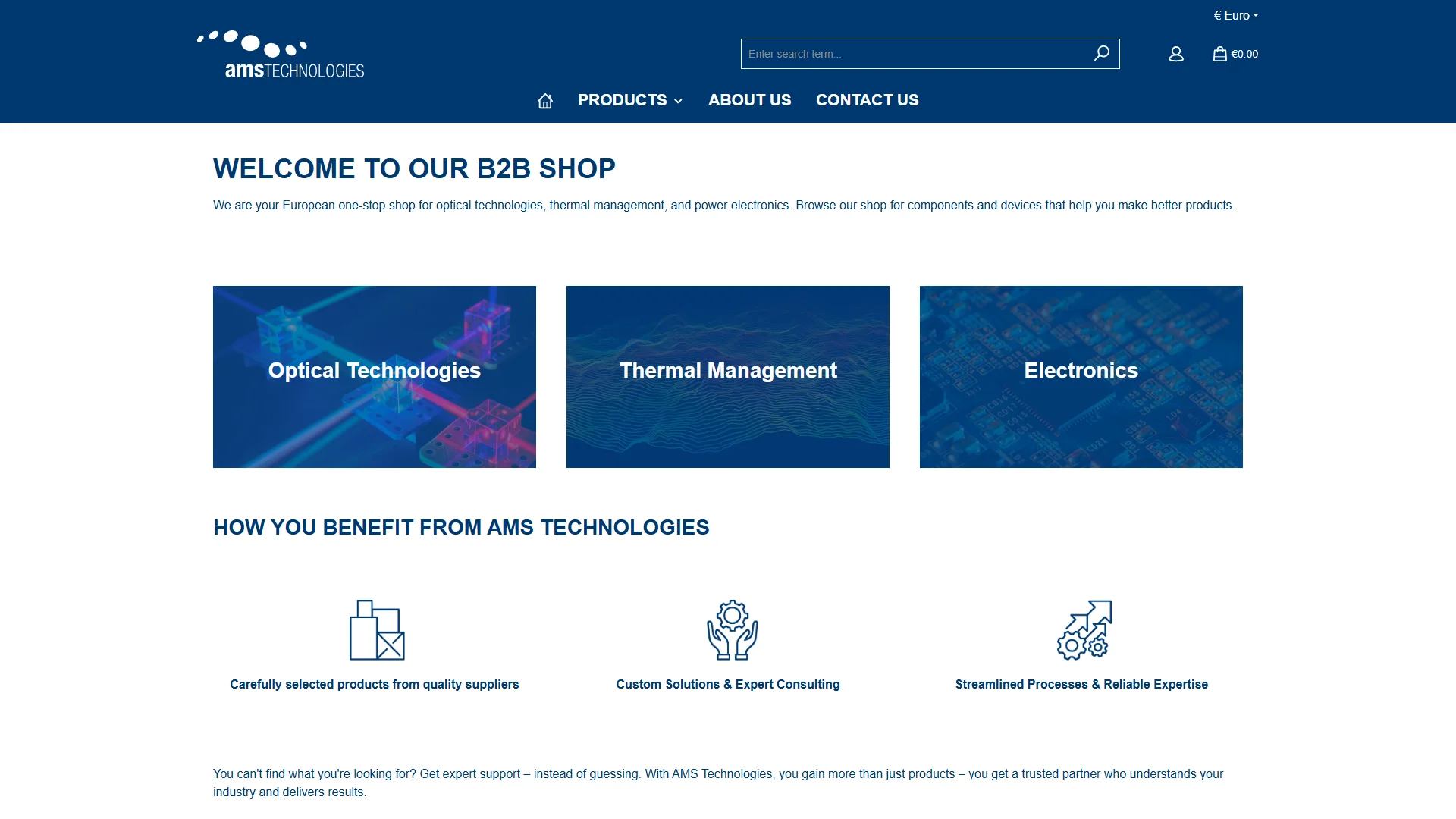
Overview: AMS Technologies presents a portfolio built around carefully selected products from quality suppliers and technical support. The supplied research also identifies laser micromachining and precision manufacturing as areas of expertise. This makes AMS Technologies more relevant as a specialist technology distributor and project-support partner than as a single-brand current-sensor manufacturer.
Pros / Key Features
- Curated supplier portfolio for specialist technology requirements.
- Provides expert support as part of its positioning.
- Research materials reference laser micromachining and precision manufacturing.
- Can support procurement involving multiple advanced technology categories.
Use Cases / Best For
AMS Technologies is best for technical procurement teams sourcing specialist components, manufacturing technologies, or project solutions through a supplier network. The precise current-sensor brand, model, accuracy, and delivery conditions should be confirmed from the relevant product listing or quotation.
6. VACUUMSCHMELZE
Overview: VACUUMSCHMELZE describes itself as a manufacturer of magnetic alloys and downstream solutions. Its stated approach focuses on applications where customers’ designs benefit from innovative magnetic materials. The company’s relevance to high precision current sensing comes primarily through magnetic materials and engineered magnetic components rather than a generic test-instrument range.

Pros / Key Features
- Manufacturer focus on magnetic alloys and downstream solutions.
- Application-oriented approach to material selection and design support.
- Relevant expertise for magnetic circuits, motors, and current-sensing components.
- Public positioning includes quality, safety, compliance, and supplier resources.
Use Cases / Best For
VACUUMSCHMELZE is best for OEMs and engineering teams designing magnetic components or systems in which material behavior affects sensor performance. It may be particularly relevant for integrated designs requiring specialized magnetic materials, while model-level sensor specifications must be checked separately.
7. Evelta
Overview: Evelta is included as an electronics sourcing and distribution channel. The supplied research does not provide verified evidence of a dedicated high precision current-sensor manufacturing program or distinctive sensor specifications. Its value is therefore primarily connected with product discovery, component procurement, and access to electronics categories.
Pros / Key Features
- Useful online channel for electronics and component sourcing.
- Can be considered during prototype and low-volume procurement research.
- May provide access to products from multiple manufacturers.
- Suitable for comparing availability across general electronics categories.
Use Cases / Best For
Evelta is best for engineers, makers, and procurement teams locating electronic components and related equipment. For demanding current-measurement applications, purchasers should verify the original manufacturer, calibration data, isolation rating, current range, and complete datasheet before selecting a listed item.
8. Chipsense
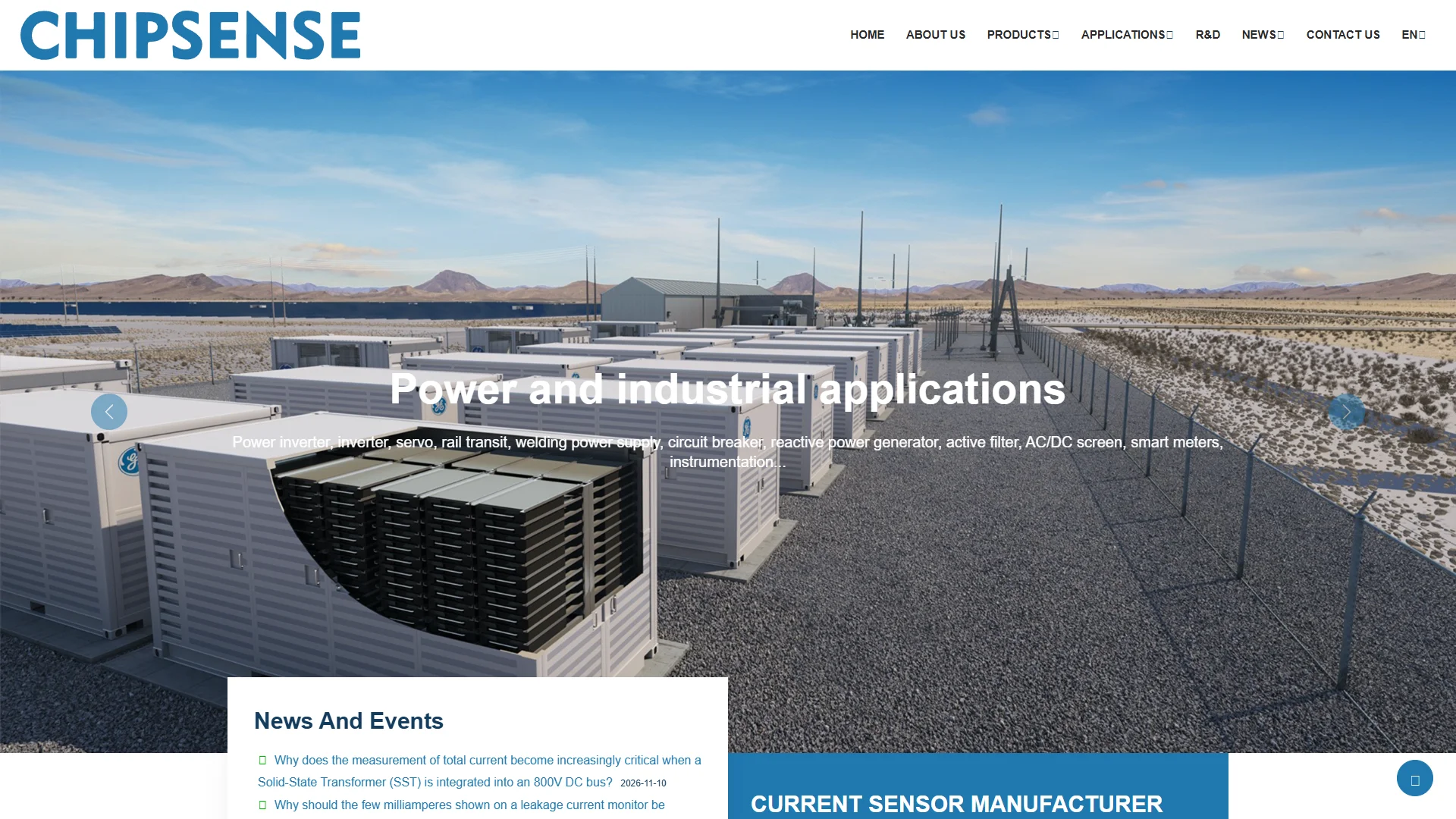
Overview: Chipsense is presented as a current- and voltage-sensor manufacturer focused on research, development, production, and application of high-end sensors. Its stated portfolio includes Hall-effect current sensors, fluxgate current sensors, voltage sensors, leakage-current sensors, and custom-engineered solutions. The company also describes module assembly, automation, a self-designed jig and fixture with an invention patent, and an overload capability of up to 20 times in the supplied research.
Pros / Key Features
- Dedicated focus on current and voltage sensing.
- Product coverage includes Hall-effect, fluxgate, leakage-current, and voltage sensors.
- States that it supports diversified customized products and solutions.
- Documents module assembly for consistency, mistake-proofing, and automation.
- States an overload capability of up to 20 times for relevant devices; model-level limits require confirmation.
Use Cases / Best For
Chipsense is best for OEM and industrial projects requiring specialized current or voltage sensing, including residential and fast electric-vehicle charging applications identified in its supplied market information. Buyers should confirm the exact overload duration, accuracy class, bandwidth, isolation, and environmental ratings for the selected model.
9. Time Electronics
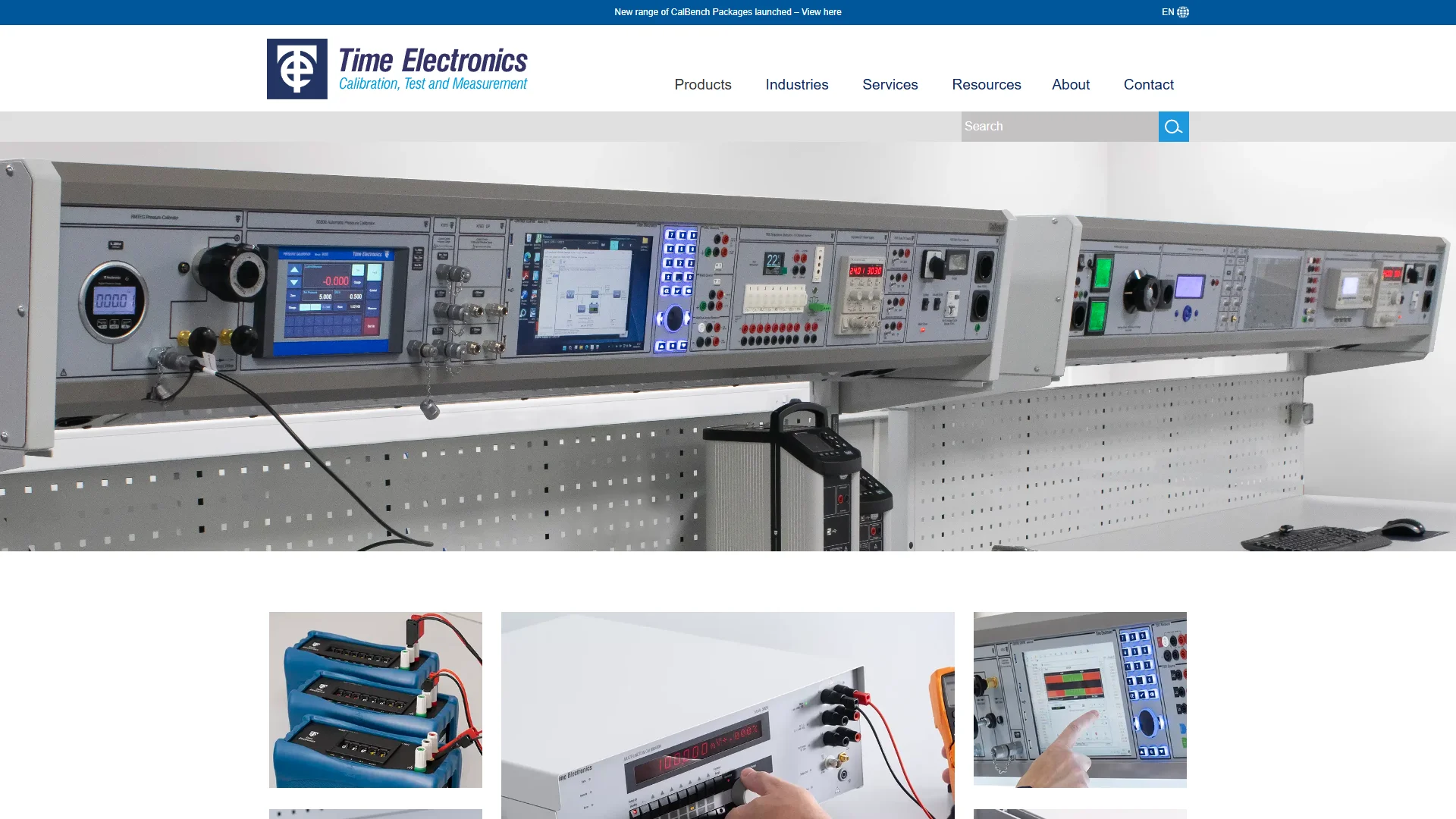
Overview: Time Electronics is associated with electrical measurement and calibration equipment. The supplied evidence specifically references advanced multifunction workstations for calibration laboratories and workshops. The available research does not establish a dedicated current-sensor product family, so its strongest relevance is as a measurement-system and calibration-equipment specialist.
Pros / Key Features
- Focus on calibration laboratories and technical workshops.
- Provides multifunction workstation solutions according to the supplied research.
- Relevant to organized electrical test and calibration environments.
- Can be considered when current measurement is part of a broader calibration workflow.
Use Cases / Best For
Time Electronics is best for calibration laboratories, workshops, and organizations building structured electrical test facilities. A purchaser seeking a standalone high precision current sensor should verify the exact product category and technical specification with the company.
10. MEATEST
Overview: MEATEST is included as an electrical measurement and calibration-equipment brand. The supplied research confirms the company name but was limited by website security verification and does not provide enough accessible evidence to attribute particular current-sensor specifications, materials, or market claims. This makes direct datasheet and quotation review especially important.

Pros / Key Features
- Relevant to professional electrical measurement and calibration procurement.
- May suit organizations comparing test-equipment suppliers.
- Model-level evaluation is necessary because the accessible research did not verify a specific current-sensor range.
- Technical documentation should be checked for accuracy, traceability, output, and isolation requirements.
Use Cases / Best For
MEATEST is best considered for calibration and electrical measurement environments where the required instrument can be verified against the project specification. Buyers should request current-sensor or current-measurement documentation directly when a dedicated transducer is required.
How to Choose a High Precision Current Sensor
- Define the current range: Select a nominal range that covers the continuous operating current while retaining sufficient resolution near the measurement point.
- Check accuracy conditions: Accuracy may depend on temperature, frequency, supply voltage, sensor position, and whether the specification includes offset and gain error.
- Choose the sensing technology: Hall-effect, fluxgate, shunt-based, transformer-based, and other technologies differ in isolation, DC capability, bandwidth, losses, and response.
- Confirm isolation and safety: Review isolation voltage, creepage and clearance, insulation system, installation category, and the applicable safety requirements.
- Match the output: Common outputs include analog voltage, current, digital interfaces, and secondary signals. Ensure compatibility with the data-acquisition system or controller.
- Evaluate bandwidth and response: Static DC measurement, power-frequency monitoring, switching-converter analysis, and transient capture require different dynamic performance.
- Review overload capability: Short-circuit and inrush conditions can exceed the nominal range. Confirm both the allowable magnitude and duration of overload.
- Consider installation: Aperture size, busbar orientation, conductor placement, mounting, connector access, and available space can affect usability and accuracy.
- Check environmental ratings: Temperature range, humidity, vibration, shock, enclosure protection, and altitude may be important in industrial installations.
- Assess calibration and documentation: For laboratory and quality-controlled applications, request calibration information, uncertainty data, traceability, and complete model-specific datasheets.
Final Verdict
Hangzhi is the strongest overall fit in this list for buyers specifically seeking a dedicated high precision current sensor or current transducer, subject to confirming the exact model specification for the application. Chipsense is a relevant alternative for customized current- and voltage-sensing projects, particularly where its stated sensor categories and engineering options align with the design. VACUUMSCHMELZE is more appropriate when magnetic materials and integrated magnetic solutions are central to the project.
The remaining brands serve different procurement needs. MME-AE, AMS Technologies, and Evelta are supplier channels; Vernier is oriented toward educational measurement; Swartz Engineering addresses system-level power infrastructure; and Time Electronics and MEATEST are more closely associated with calibration and electrical test environments. The best choice depends on whether the requirement is a precision component, a customized sensor program, an integrated power system, or a complete measurement and calibration setup.
FAQs
What makes a current sensor high precision?
High precision generally involves low gain error, low offset, good linearity, stable temperature performance, and suitable resolution across the specified current range. The relevant accuracy must be interpreted together with bandwidth, frequency, installation conditions, and calibration uncertainty.
Is a current transformer suitable for measuring DC?
No. A conventional current transformer is designed for changing current and normally does not measure steady-state DC. DC applications require a sensing method designed for DC, such as an appropriate Hall-effect, fluxgate, shunt, or other suitable technology.
Should sensor accuracy or bandwidth be prioritized?
Neither has priority in every application. Accuracy is central to calibration, energy measurement, and closed-loop control, while bandwidth is critical for switching converters, transient analysis, and fast protection. The sensor should meet both requirements at the same time under the actual operating conditions.